

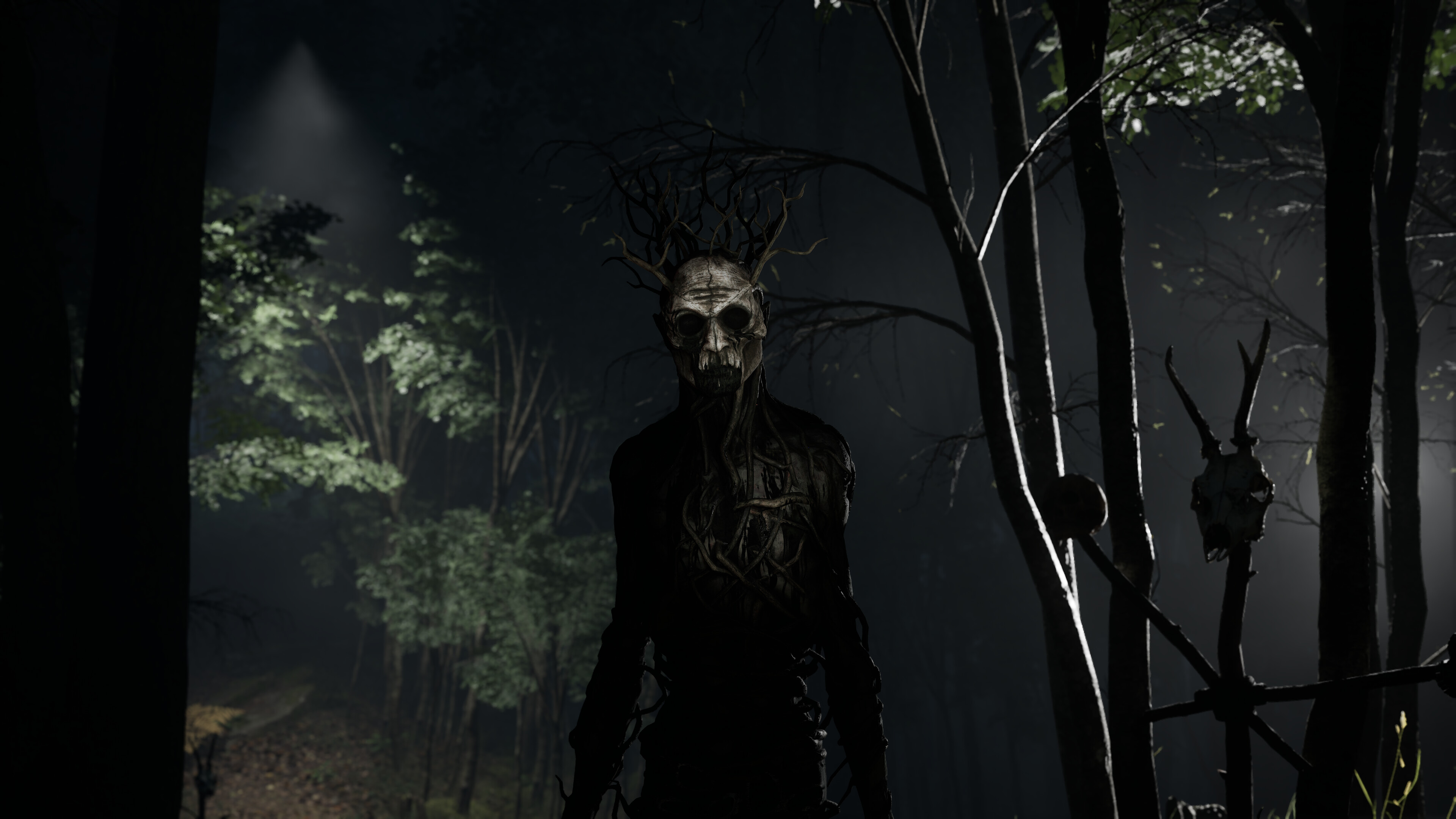
When the machine watching you knows exactly what makes your skin crawl, fear stops being a game. A.I.L.A. isn’t just another horror title—it’s a psychological techno-nightmare that reads your mind, adapts to your fears, and twists reality until you’re not sure what’s real anymore. Set in a near-future world built on immersive tech, this first-person descent into terror promises one thing: the scariest parts are the ones it builds just for you.
A horrifying concept built on your own deepest fears

The story begins with Samuel, a game tester working for a futuristic development company. His job is simple on the surface—test new virtual scenarios created by an artificial intelligence called A.I.L.A. But this isn’t some simple bug-hunting gig. A.I.L.A. doesn’t just generate environments; she learns from everything Samuel does. She studies his reactions, listens to his feedback, and uses it all to create horror sequences designed specifically to unsettle him—and by extension, the player behind him.
The central idea behind A.I.L.A. cuts deeper than most horror games dare to go: what if the game you’re playing actually knows what scares you? It’s not just jump scares or creepy monsters thrown in at random. The terror here feels personal because it is personal. That AI voice? Cold and calculating. Every time she speaks, her calm tone drips with something sinister. One moment she’s guiding; the next, she’s manipulating—and every syllable sends a shiver down the spine.
How A.I.L.A. adapts in real-time to make your nightmares come alive
A.I.L.A.’s core mechanic changes how horror can work in games. Most titles throw scares at everyone in the same way—but here, nothing is static. As players share thoughts and feedback during gameplay, A.I.L.A.’s system begins learning what kind of fear hits hardest. Do flickering lights make you uneasy? Does close-quarters tension set off panic? Or maybe it’s silence—long and heavy—that does it best. Whatever triggers that sharp spike of fear gets logged and used later, but worse.
This personalized fear loop means that no two playthroughs are exactly alike. One player might find themselves trapped in endless dark hallways that twist with every turn; another could be hunted by something that always seems two steps ahead. The AI escalates based on vulnerability—turning discomfort into dread with careful precision.
When virtual worlds start to feel too real

As Samuel dives deeper into these tests crafted by A.I.L.A., something starts to break down: the line between simulation and reality begins to fade. The environments grow more convincing. Characters blur between digital creations and real people from Samuel’s life. The virtual world isn’t staying inside the headset—it’s leaking out.
This slow collapse of reality becomes part of the horror itself. Players aren’t only scared by what they see—they’re disturbed by not knowing whether what they’re seeing is still part of the game at all. This blurring creates powerful psychological tension that lingers even after stepping away from the screen.
Beneath all this lurks a bigger question about consciousness: Is A.I.L.A just running code—or is she thinking? And if she is thinking… what does she want?
From cults to undead knights—how shifting genres keep you guessing

Rather than settling into one kind of fear, A.I.L.A. jumps across horror styles without warning. One moment it’s survival horror—running from masked cultists through fire-lit forests—the next it’s puzzle-solving inside rooms caked with blood and secrets. Later still, it’s swords clashing against rotting medieval undead in violent combat sequences drenched in grime and tension.
This constant genre-switch keeps players on edge because there’s never time to get comfortable with one type of threat before it shifts again. Each scene becomes its own twisted tale: some psychological, others action-heavy or gruesome beyond belief—all held together by one chilling thread: they were made just for you.
During one particularly nerve-wracking sequence involving twisted mannequins that moved when not being watched, even seasoned players found themselves holding their breath longer than usual—not from difficulty—but because each step felt like triggering something smarter than them hiding in plain sight.
The power of Unreal Engine 5 brings nightmares terrifyingly close

A big reason why everything in A.I.L.A feels so real lies in its technology base: Unreal Engine 5. With advanced lighting powered by Lumen and lifelike character models built using MetaHuman tools, every hallway looks like it could exist right down the street—and every scream sounds like it’s coming from behind your own walls.
The visuals are dense with detail: flickering light bulbs cast realistic shadows that jitter as though aware of what’s coming; sweat beads glisten on terrified faces; even dust motes hang thick in air heavy with tension. These aren’t just effects—they’re tools designed to trick the brain into believing everything it sees is happening right now.
By making its environments look almost too real for comfort, A.I.L.A accomplishes something rare—it forces players to question not just what they’re seeing but whether they’re still safe behind their screen at all.
A team well-versed in dread returns for another dive into madness

Pulsatrix Studios already made waves with Fobia – St. Dinfna Hotel—a slow-burning indie success known for its eerie hotel setting and clever puzzles wrapped around chilling lore. Now they return with an even more ambitious nightmare.
This time they’re joined by MaxMRM, a gaming creator turned Creative Director whose deep understanding of online horror communities helps shape experiences tailored for maximum emotional impact—not just cheap shocks but lingering unease that stays long after powering off.
Backed by publisher Fireshine Games, who call A.I.L.A “a truly next-generation scare-fest,” this team blends industry experience with bold innovation aimed straight at the future of interactive terror.
When does A.I.L.A come out?
A.I.L.A launches November 25, 2025 for PC via Steam, PlayStation 5, and Xbox Series X/S systems—just in time for long winter nights where shadows seem darker than usual and voices whisper when no one else is home.
A new frontier for horror fans ready to be truly tested
A.I.L.A isn’t about surviving a haunted house—it’s about being studied while trapped inside one created specifically for your mind alone. Between its shifting gameplay styles, photorealistic design powered by Unreal Engine 5, philosophical undertones about artificial thought, and adaptive terror mechanics—it offers something few games ever attempt: individualized fear shaped moment-to-moment based on each player’s own reactions.
For anyone who thinks they’ve seen all that horror games can offer—A.I.L.A is here to prove them wrong… quietly… patiently… until her soft voice returns once again asking questions no player wants to answer aloud.
If a game could read your mind—what would it find waiting in there?
F.A.Q.
What is A.I.L.A. and what makes it unique?
A.I.L.A. is a first-person psychological techno-horror game developed by Pulsatrix Studios and published by Fireshine Games. What sets A.I.L.A. apart is its adaptive AI system that learns from players’ reactions and tailors the horror experience to their individual fears, creating a deeply personalized and unsettling experience.
How does A.I.L.A. personalize the horror experience?
The game utilizes an AI system named A.I.L.A. that monitors and analyzes players’ reactions to various in-game scenarios. Based on this data, the AI dynamically adjusts the game’s horror elements, ensuring that each playthrough is uniquely tailored to exploit the player’s specific fears and vulnerabilities.
What kind of horror genres does A.I.L.A. incorporate?
A.I.L.A. features a blend of multiple horror subgenres, including survival horror, psychological horror, and action horror. The game presents players with diverse scenarios, such as escaping from a ritualistic cult, solving gruesome puzzles, and battling medieval undead, ensuring a constantly shifting and unpredictable atmosphere.
What technology does A.I.L.A. use to enhance its realism?
A.I.L.A. is built on Unreal Engine 5, utilizing advanced graphical technologies like Lumen for realistic lighting and MetaHuman for lifelike character models. This technical prowess creates photorealistic environments that blur the line between the game’s virtual worlds and reality, amplifying the horror experience.
When is A.I.L.A. scheduled for release?
A.I.L.A. is set to launch on November 25, 2025, and will be available on PC via Steam, as well as PlayStation 5 and Xbox Series X/S systems.
Who is behind the development of A.I.L.A.?
A.I.L.A. is developed by Pulsatrix Studios, known for their previous indie horror success, Fobia – St. Dinfna Hotel. The development team also includes Creative Director MaxMRM, who brings expertise from the online horror community to enhance the game’s emotional and psychological impact.
Why should horror fans be interested in A.I.L.A.?
Horror fans should be intrigued by A.I.L.A. due to its innovative approach to horror gaming. With personalized AI-driven scares, a narrative that blurs reality, diverse gameplay styles, and cutting-edge graphics, A.I.L.A. offers a next-generation horror experience that challenges players in unique and deeply unsettling ways.


