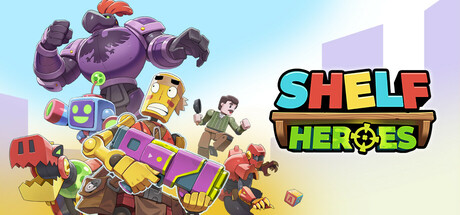
There’s this deliciously offbeat premise where you, as a player, assemble a “toy fighter” from a messy box of plastic knights, rubber ninjas, and whatever else you find lying around. It’s almost as if somebody gave me a stack of old circuit boards and told me I could build a custom drone to deliver pizza. Absurd? Maybe, but I like to see people push boundaries, and the developers for Shelf Heroes appear to be doing just that. They mix in roguelike features so each run feels fresh, and they wrap it all in a household environment that begs you to discover what lurks in the corners. Nothing says “innovation” quite like a sticky hand grappling hook you can fling from a kitchen counter to the top of a fridge.
Constructing the Perfect Toy Warrior
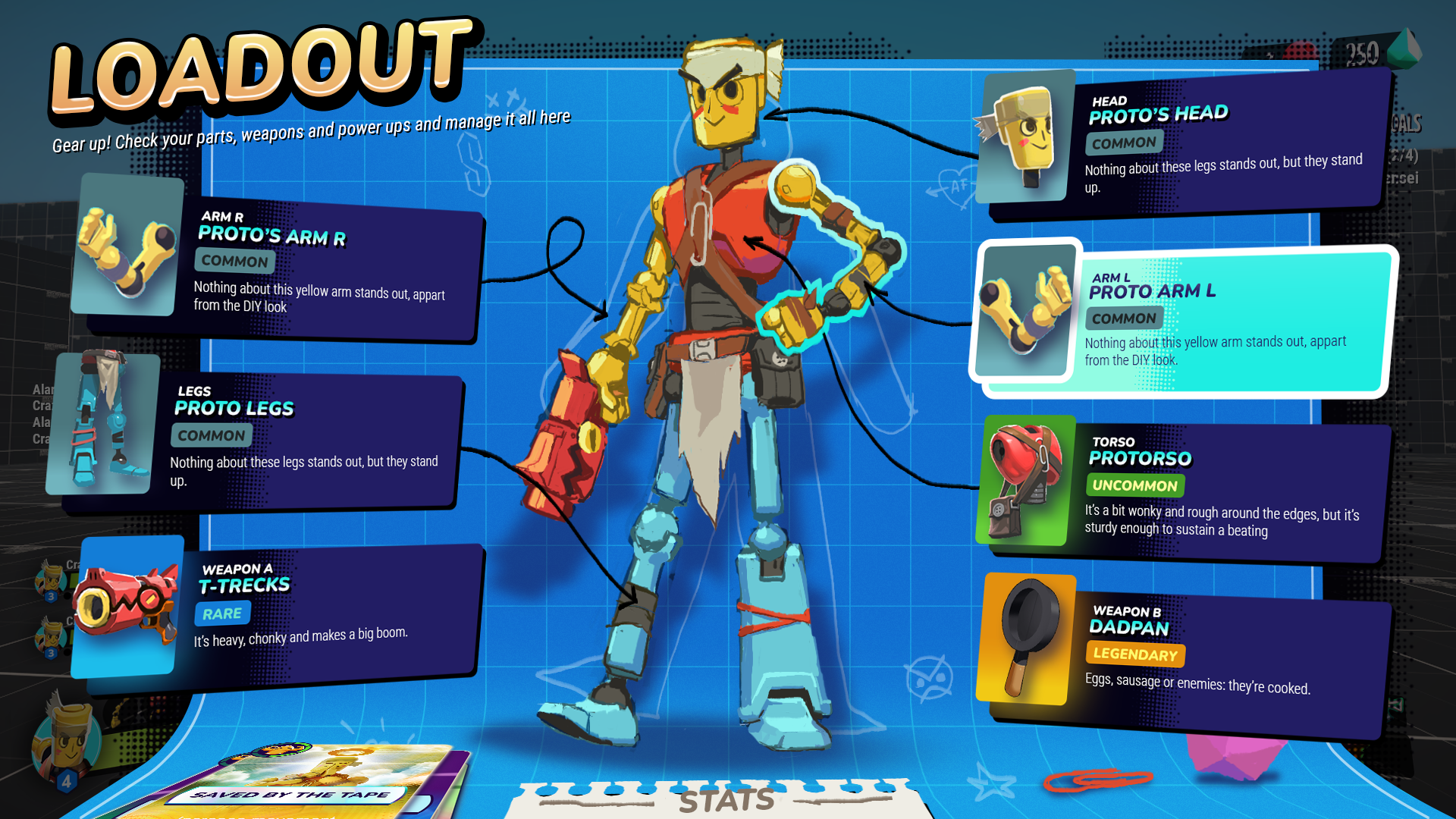
One of the biggest draws is the ability to tinker with your character’s parts for maximum efficiency. Each piece of your toy—from its arms to its feet—has a distinct passive or active ability. You might combine an arm that grants lightning attacks with a torso that improves jump height, or maybe slap on a mechanical dinosaur tail that doubles as a mini flamethrower. Yes, that’s actually the sort of zany design I’m hoping to see. If the game’s as moddable as it sounds, you can imagine me hanging around the parts selection screen for hours, maximizing every tiny advantage.
Before you assume it’s all cosmetic, let me clarify: the various toy parts you attach will directly affect how you play. In Shelf Heroes, if you find your plastic legs no longer offer the agile boost you want, you can try out a new set of robot spider limbs. No big deal—just reassemble your toy champion on the fly. It’s that sense of freedom that stands out. The game practically begs you to experiment, and if you’re anything like me, you’ll spend half your time figuring out which part combos produce the weirdest (or deadliest) results.
Toybox Warfare: Sticky Hands and Furious Blasters
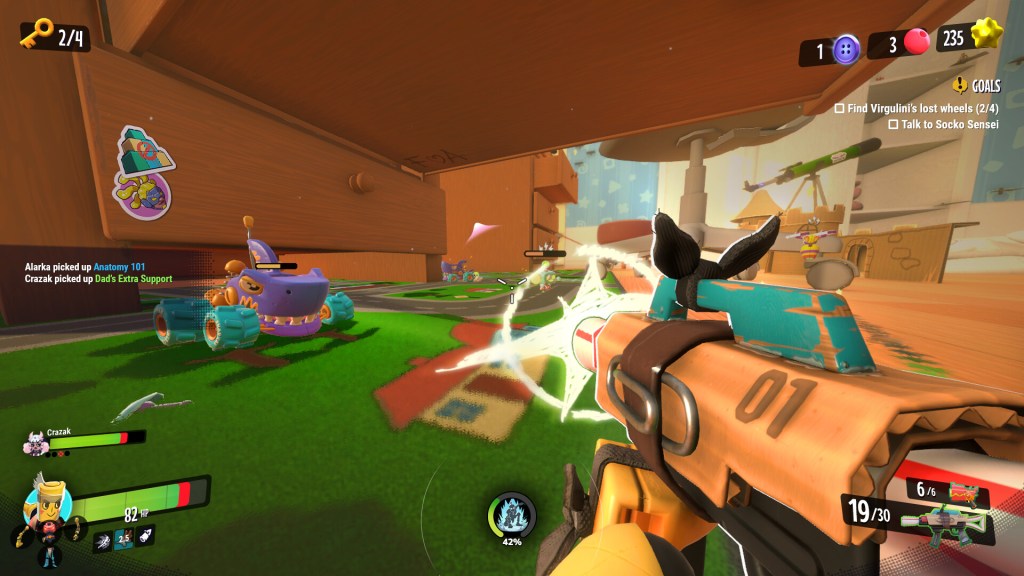
Combat in Shelf Heroes isn’t just about looking cute. The game brings a hearty dose of roguelike gunplay, letting you fire everything from tiny toy blasters to miniature shotguns. If distance fighting doesn’t cut it, there are swords and bows that shimmer in a plastic sheen. The developers appreciate your love of chaos. If you’re feeling especially crafty, you can use a stretchy, sticky hand to swing across the environment and land on an unsuspecting toy’s head with the grace of a swashbuckling hero. Think of it as a digital grappling hook, minus any sense of dignity: you fling a giant sticky hand and watch it splat onto a wall or a lamp. It’s about as wild as you can get without bricking your entire system.
To keep you on your toes, your character’s limbs can be blasted right off. That’s right—these little pieces of plastic can explode under enemy fire, leaving you scrambling to reattach something before your enemy lands another blow. I love the idea of mid-combat reassembly. You’ll have to think quickly to keep yourself in one piece, especially when you realize an entire swarm of toy soldiers is spraying you with plastic arrows.
Power Cards and Roguelite Progression
Each time you level up in a run, you can choose from a set of power cards. These cards enhance your abilities, maybe by increasing the blast radius of your blaster or adding a burn effect when your foam arrows strike an enemy. The catch is that each run offers different card choices, so you never know what buffs or twisted powers you’ll get. It keeps you guessing, especially when you’re forced to pick from a stack of questionable upgrades. Do you go for the high-risk, high-reward incendiary shot, or do you play it safe and enhance your melee damage?
Pair this card system with the customizable body parts, and you’re looking at a deep well of potential synergy. Imagine stacking a card that boosts your projectile’s splash damage with a torso piece that grants a triple-shot effect. That alone would be enough to delight anyone who likes to push game systems until they break.
Exploring the Domestic Dispatch: Varied Household Environments
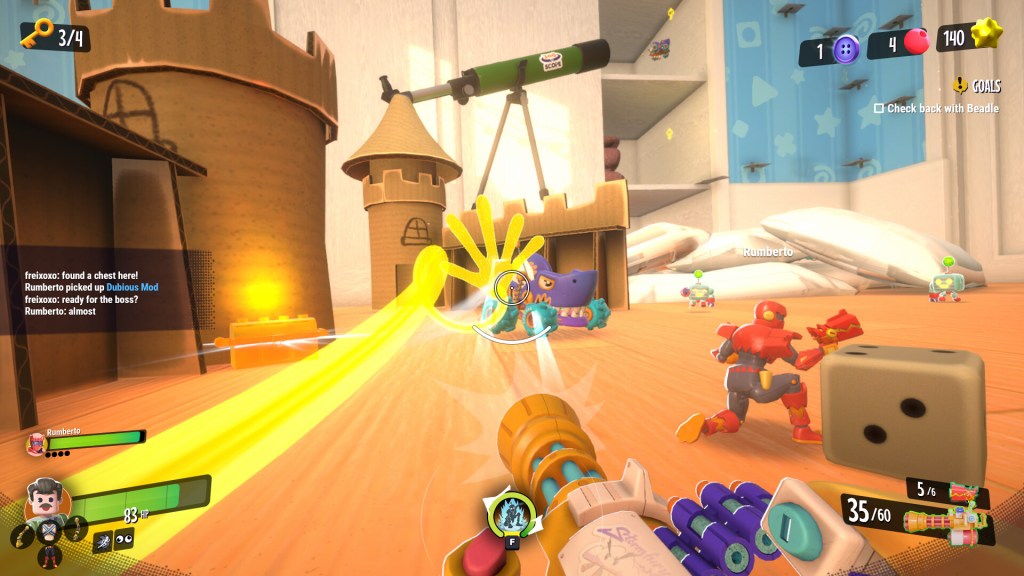
Shelf Heroes sets your toy battles across different areas of the house and nearby garden. You might be hopping over cereal boxes in the kitchen or ducking behind potted plants in the backyard. These small-scale arenas promise to shake up your playstyle since each environment introduces fresh hazards and vantage points. There’s a certain joy in seeing everyday objects turned into obstacles or cover spots. A simple coffee mug might block laser beams, or a pot of boiling water on the stove might be your next big hazard if you get too close.
Banding Together: Bringing Friends Into the Mayhem
Rumor has it, up to three players can hop in together for cooperative chaos. Talk about fueling that “buddy hacker vibe” I love so much. Nothing says teamwork like group-charging a swarm of unhinged plushies and remote-control robots. In Shelf Heroes, you and your friends can each customize a creature, leading to some interesting synergy. One friend might pack a big AoE weapon that roasts entire hordes, while another swings in with sticky grapples to stun key targets.
Co-op has a shared progression system, so you aren’t stuck grinding alone. But I’m curious how the game handles difficulty scaling. Will adding more players crank up the aggressiveness of the rogue toys? Or do your power cards each become more specialized, forcing you to coordinate your builds? Regardless, I see a golden opportunity for a bit of comedic sabotage. Remember, all it takes is one stray slash from your friend’s sword to dislodge a crucial limb from your body. Friendly fire might be a real concern, especially if you can’t resist testing your brand-new rocket launcher.
Unraveling the Tale of Villainous Toys
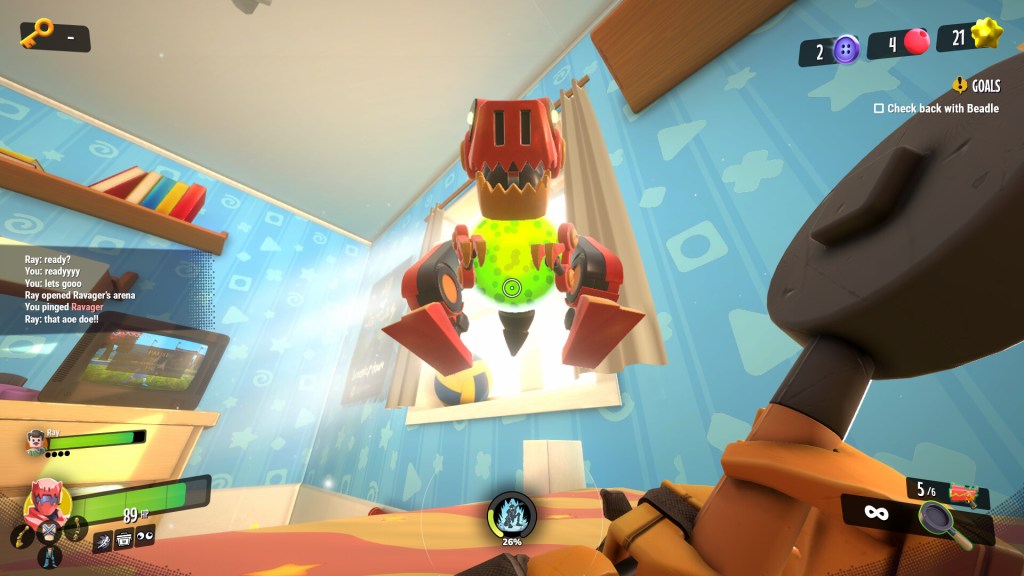
Shelf Heroes also sprinkles in some story-driven elements. You’ll chat with NPCs scattered around the house to piece together the reason behind the plastic rebellion. It sounds like one part mystery, one part comedic banter. Maybe the rogue toys are fed up with being shoved in a dusty attic. Or perhaps they discovered some twisted code that makes them revolt. Either way, it’s refreshing to have a game that goes beyond “Run this corridor, shoot these things” to include some narrative bits.
Exploring the lore as you climb from bedroom to attic might provide just enough motivation to keep forging ahead. And if the plot reveals hidden bosses or mini-dungeons in the corners of the house, I’m game. We can only hope for a final confrontation in the living room against a monstrous plush teddy who’s grown too big for his britches. Nothing says satisfying showdown quite like toppling a tyrannical stuffed bear that’s been corrupted by power cards.
When Does Shelf Heroes Come Out?
Shelf Heroes is set to release in 2026 for PC Early Access. That means you’ll be able to wishlist the game and dive in before all the final tweaks are locked in. For better or worse, you’ll see any balancing changes or content drops the moment they go live, giving you a chance to influence the game’s direction. Keep in mind, Early Access can be a roller coaster. One week, a specific sticky hand technique might be unstoppable; the next week, it might be nerfed into oblivion. At least that keeps you on your toes.
Frequently Asked Questions (FAQ)
1. What is Shelf Heroes?
Shelf Heroes is an upcoming roguelike first-person shooter (FPS) where players control customizable toy warriors and battle rogue toys across household environments. It features dynamic combat, a mix-and-match customization system, power cards for progression, and cooperative multiplayer for up to three players.
2. How does the toy customization work?
Players can build their toy hero by attaching different body parts, each with unique active and passive abilities. For example, you can equip an arm that fires lightning, a torso that boosts jump height, or even a dinosaur tail that breathes fire. These customizations impact gameplay, allowing for creative and strategic builds.
3. What kind of weapons can I use?
Shelf Heroes offers a range of weapons, including toy blasters, bows, shotguns, and melee weapons like swords. Players can also use a sticky hand to grapple around levels, adding a unique movement mechanic to combat.
4. How does roguelike progression work in the game?
Each time you level up during a run, you can select from a set of power cards that grant new abilities or boost existing ones. The random selection ensures that each run feels different, adding variety and strategic choices to progression.
5. Can I play Shelf Heroes with friends?
Yes! Shelf Heroes supports cooperative multiplayer for up to three players. You and your friends can team up to take on the rogue toys, combining different character builds and abilities for maximum effectiveness.
6. What kind of environments will I be fighting in?
Players will battle in various household and garden settings, such as kitchens, bedrooms, and backyards. These environments introduce both obstacles and strategic opportunities, like hiding behind everyday objects or using them as cover.
7. When will Shelf Heroes be released?
The game is set to launch in 2026 as a PC Early Access title. Players can wishlist it on Steam to stay updated on its development and get access to the game before its full release.