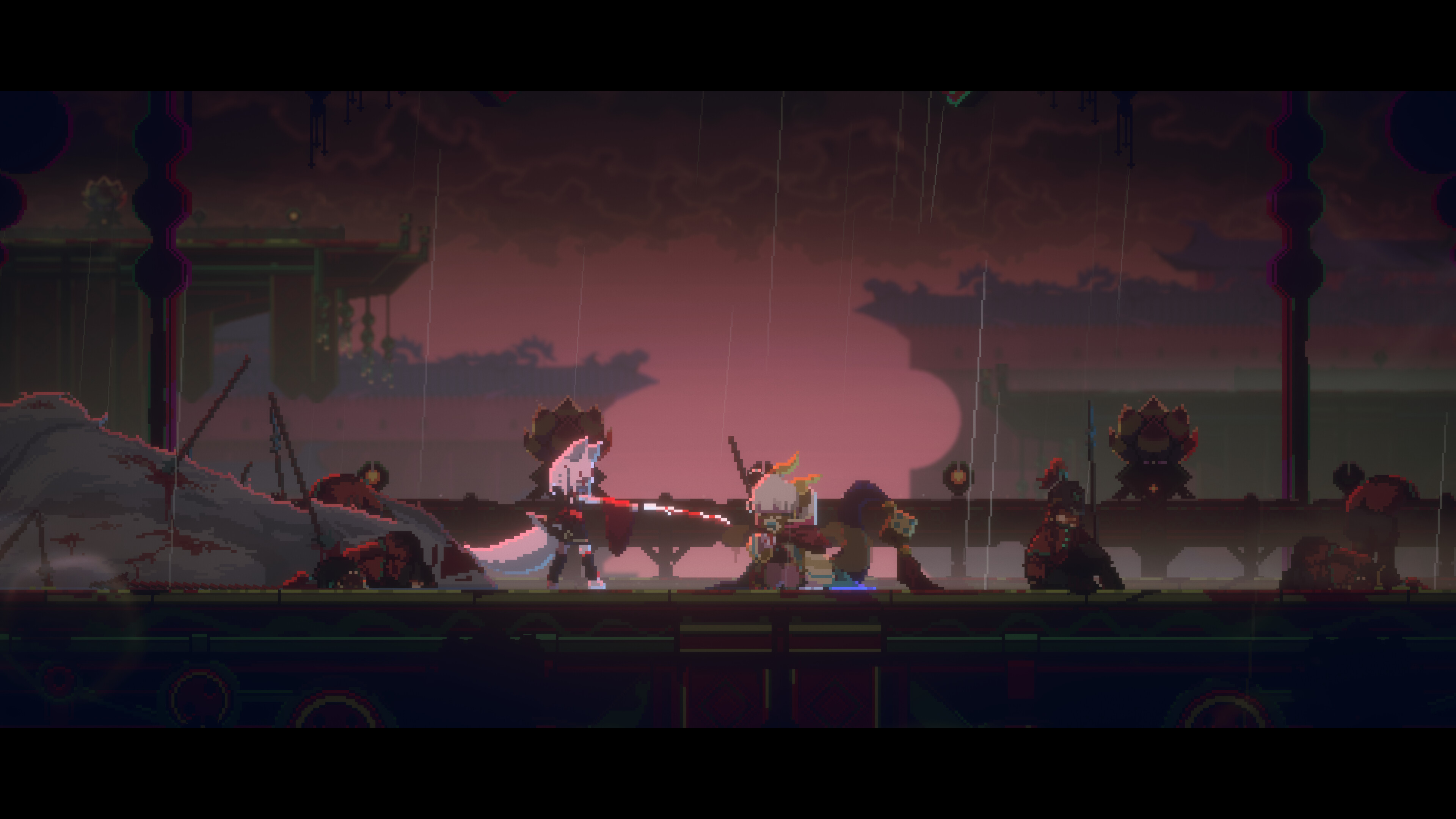
In Inari, players take on the role of a divine executioner armed with razor-sharp kunai and the power to teleport instantly to them, slicing through rebel princesses in a stylish, high-speed 2D world. This action-platformer from 1HP Studio blends fast, technical combat with a one-life-per-encounter structure, all set in an Eastern fantasy land where ancient gods face off against rising machines. It’s punishing, precise, and pulsing with danger—and that’s exactly the point.
Combat built around kunai-teleport precision creates constant motion and mastery

At the heart of Inari lies its most defining mechanic: throwing kunai and instantly teleporting to them. This system isn’t just a flashy trick—it drives both movement and combat. Players must hurl their blades across the screen, blink into their position mid-air, and chain attacks as they fly through tight corridors or dive into enemy ranks. It’s a mechanic that transforms every fight into a puzzle of momentum and placement.
Unlike other platformers where dashes or grappling hooks are just tools among many, Inari builds its entire rhythm around this teleport system. It asks players to think two steps ahead—where to throw next, when to strike, and how to escape—all in seconds. One moment of hesitation can mean death. A well-timed teleport, on the other hand, feels like slipping between the blades of fate itself.
This kind of design will feel familiar to anyone who has spent hours replaying levels in Katana ZERO or Celeste for just one perfect run. Those games reward players who learn every frame and input. Inari aims for that same space: not casual platforming but tight-wire tension where flow comes only after failure teaches timing.
The challenge is real: one life per encounter means total focus or instant death
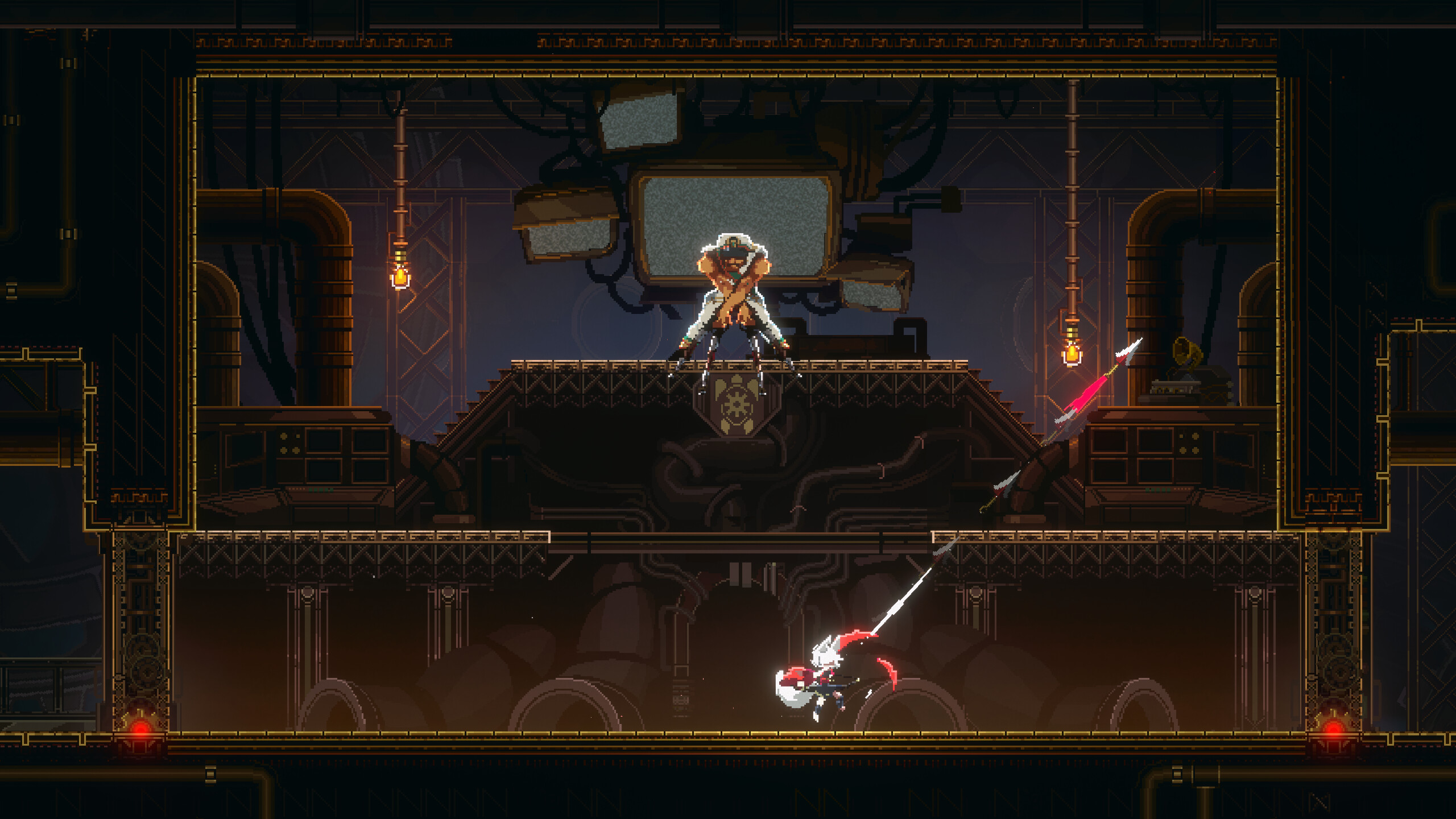
Inari doesn’t believe in second chances. Each fight is designed around overwhelming odds where one mistake ends everything. That single-life setup forces players to approach each scenario with care—even if they’re flying through it at top speed.
This structure turns even simple-looking rooms into deadly tests of memory and reaction. Players must learn enemy patterns by heart—where they spawn, how they attack, what angles they leave open—and then execute flawlessly. The result is a loop familiar to fans of high-difficulty platformers: try, fail fast, retry better.
The tension recalls those grueling nights some players spent mastering Ghostrunner’s gauntlets or shaving seconds off a Celeste climb. There’s no fluff here—no upgrades to pad out progress or puzzles to slow things down. Just raw skill versus level design that refuses mercy.
A divine mission with no room for justice: story built on obedience over choice
Beneath the speed and spectacle lies
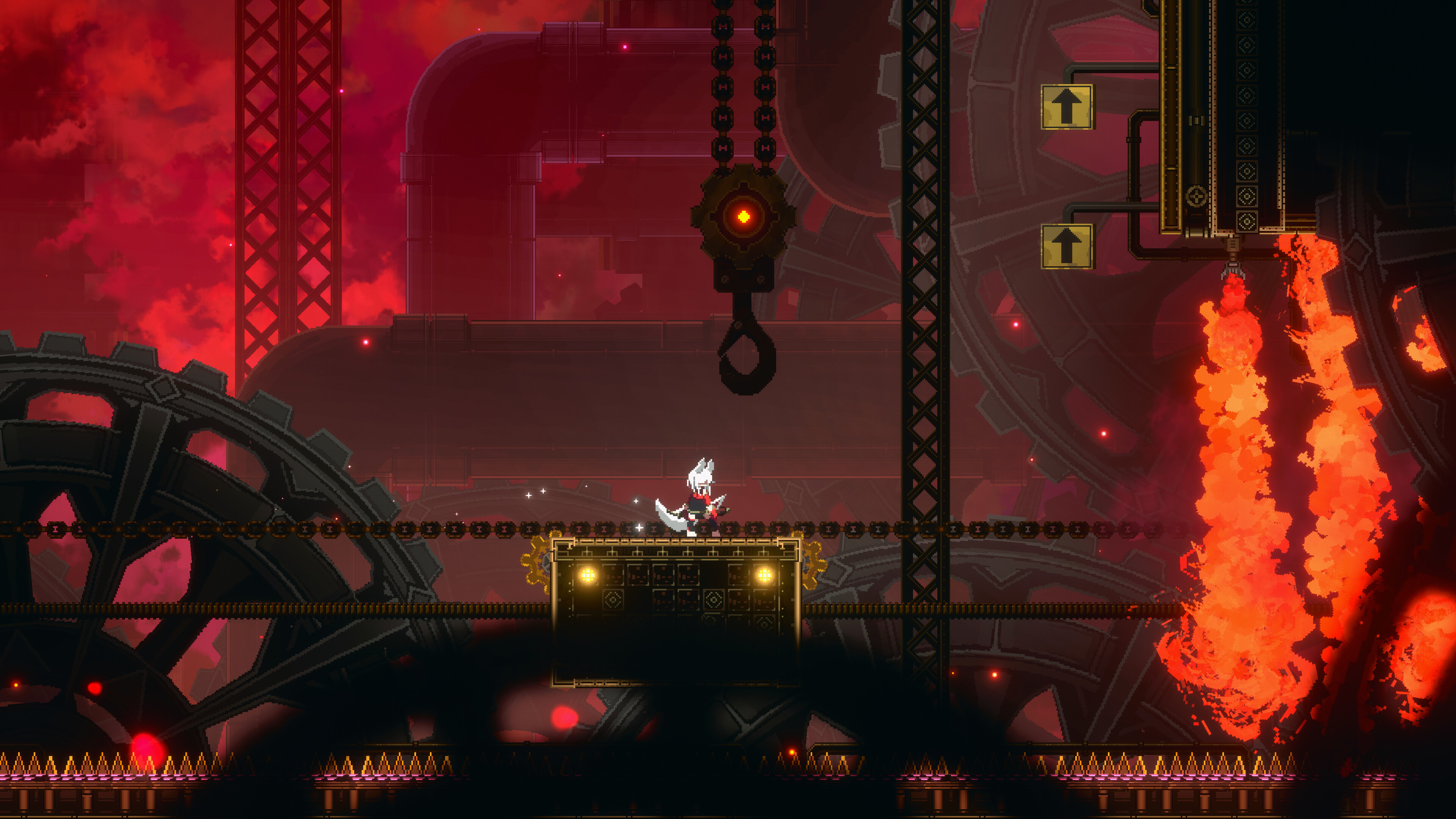
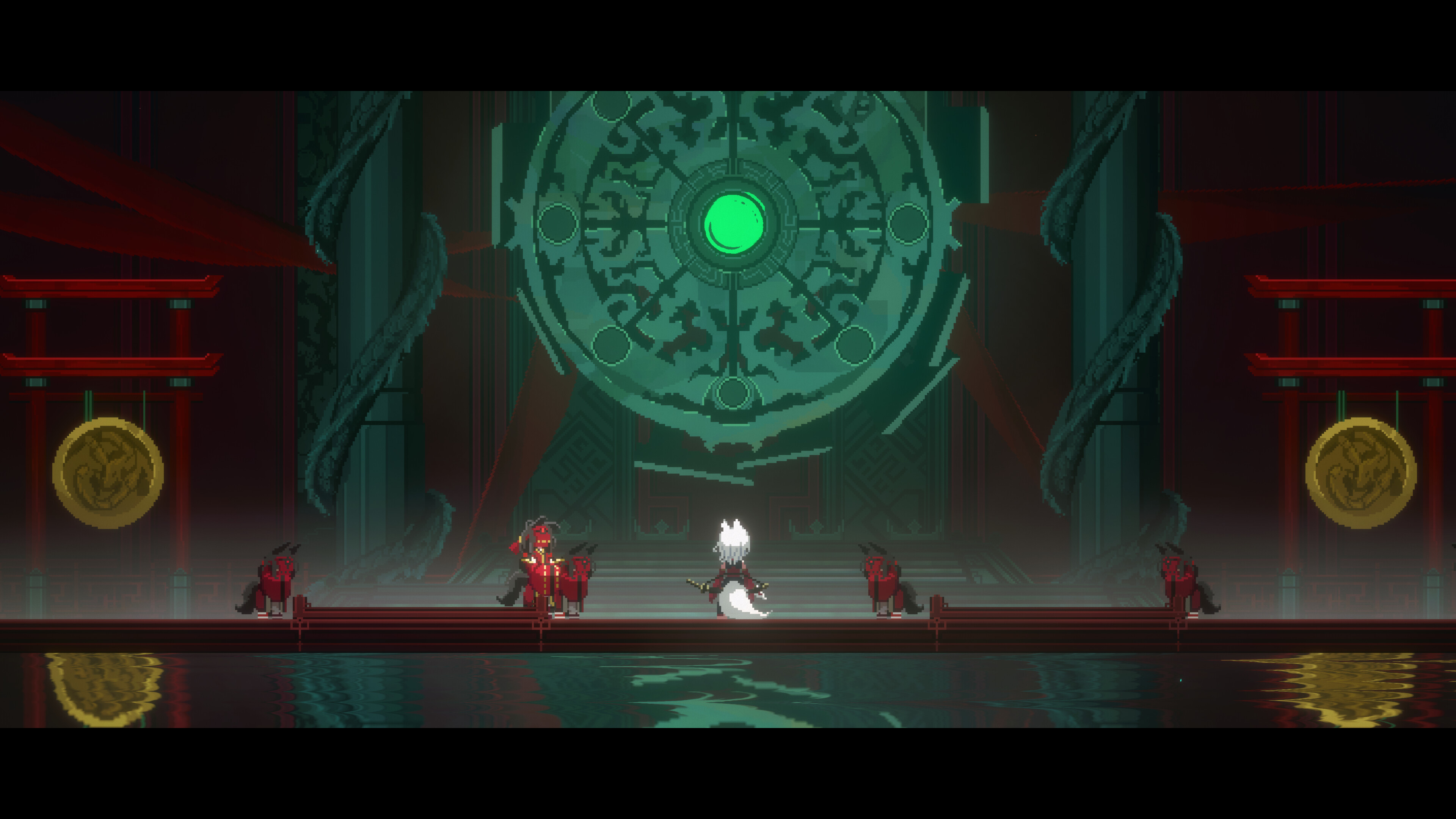
something colder: duty without conscience. Players step into the boots of Izna the Reaper, sent by a powerful Lord from the High Realm to kill seven rebellious princesses—daughters who dared defy divine law. Their crime? Challenging gods who won’t let go of power.
This world isn’t black-and-white. It’s painted in shades of grey where divine order crushes mortal ambition under sacred rules. The Mortal Realm is inventing machines and moving forward; the High Realm demands obedience and tradition. Izna stands between them—not as hero or villain—but as weapon.
The game makes this clear early on: “Justice is not for you to question.” That line echoes through every level as players cut down rebels who may not be wrong—but stand in Izna’s way all the same. It’s a rare twist in action-platformers that usually cast players as righteous saviors.
This idea struck hard during an early hands-on demo session when Izna approached one of the Seven Daughters not with fury—but silence. The enemy begged her case while drawing weapons anyway, knowing there was no escape from judgment already passed above her head. It was unsettling—and unforgettable.
Teleportation isn’t just clever—it defines every part of gameplay and identity
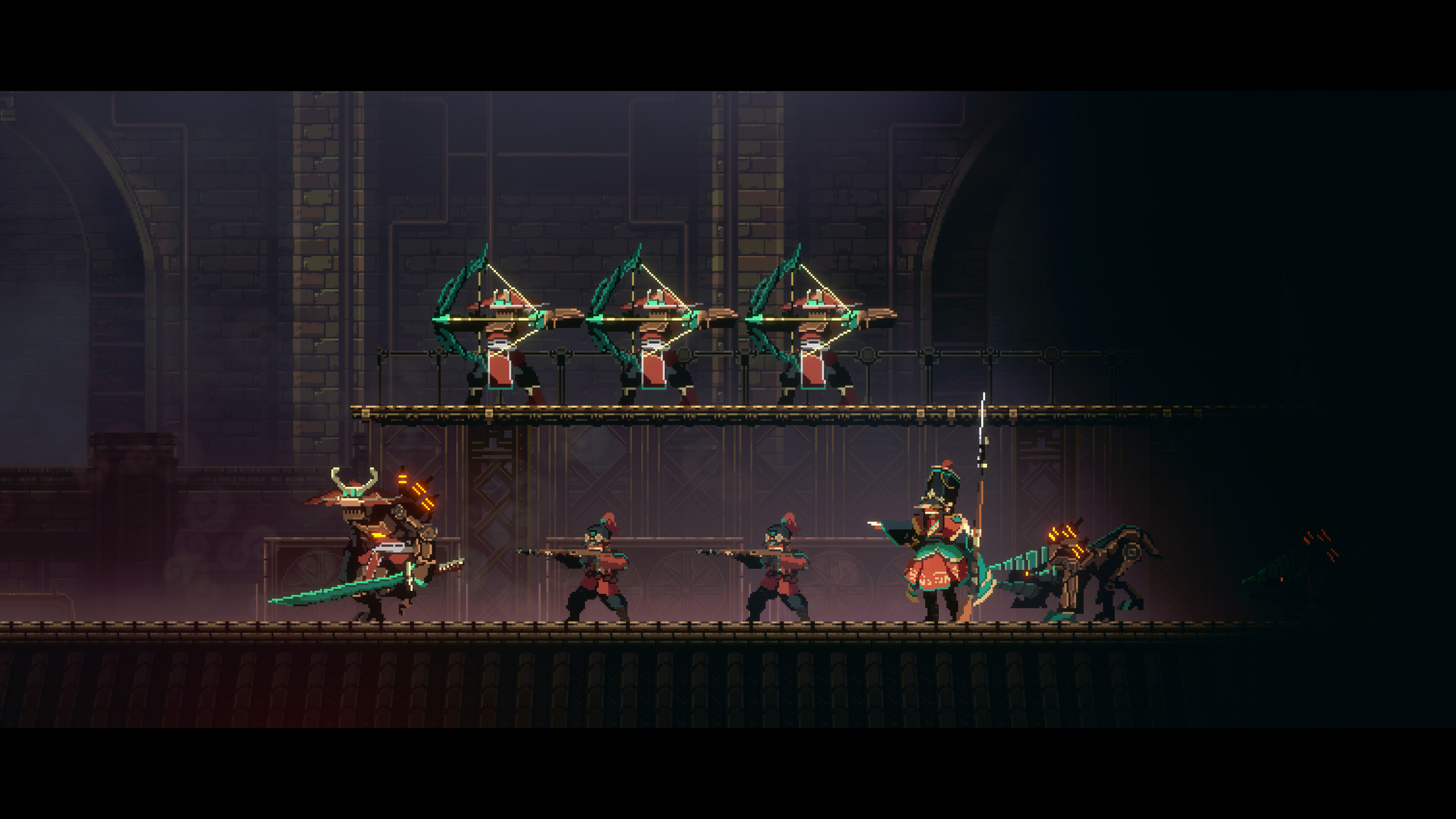
Many action-platformers borrow ideas from each other: double-jumps here, wall-climbs there. But Inari avoids imitation by building itself entirely around its kunai-teleport mechanic—a tool so central it rewrites how players move through space.
This isn’t just about crossing gaps or dodging hits; it’s about creating new paths mid-fight using projectiles as anchors for movement. Players aren’t reacting—they’re crafting routes as they go, warping between enemies like lightning dancing across rooftops.
By merging traversal and offense so tightly, Inari reaches something rare: mechanical identity. It doesn’t feel like Katana ZERO despite sharing speed; it doesn’t copy Celeste despite demanding precision; it doesn’t clone Nine Sols despite sharing themes of Eastern futurism—it carves its own lane with purpose.
A visually sharp pixel world built for clarity at high speeds
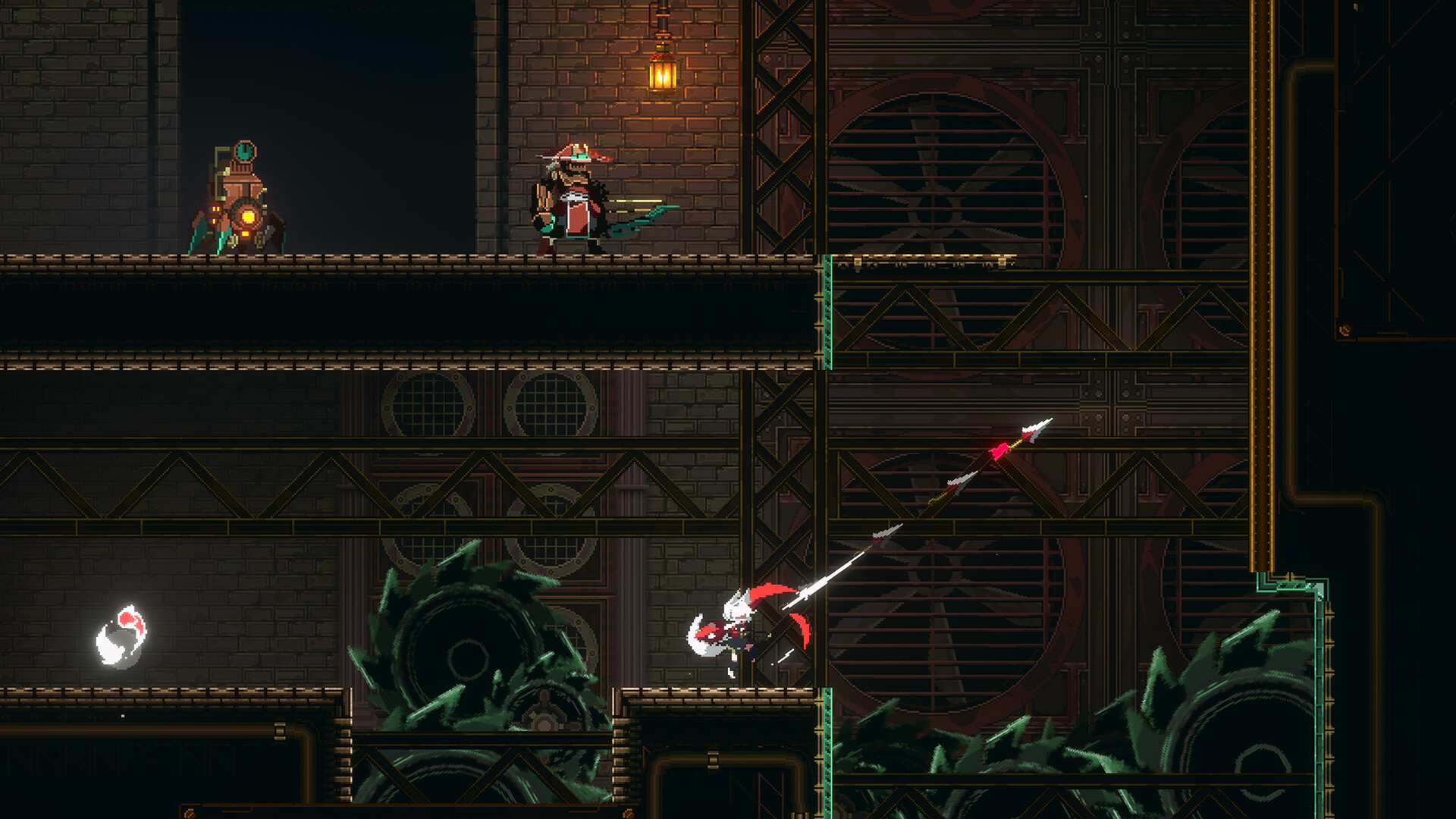
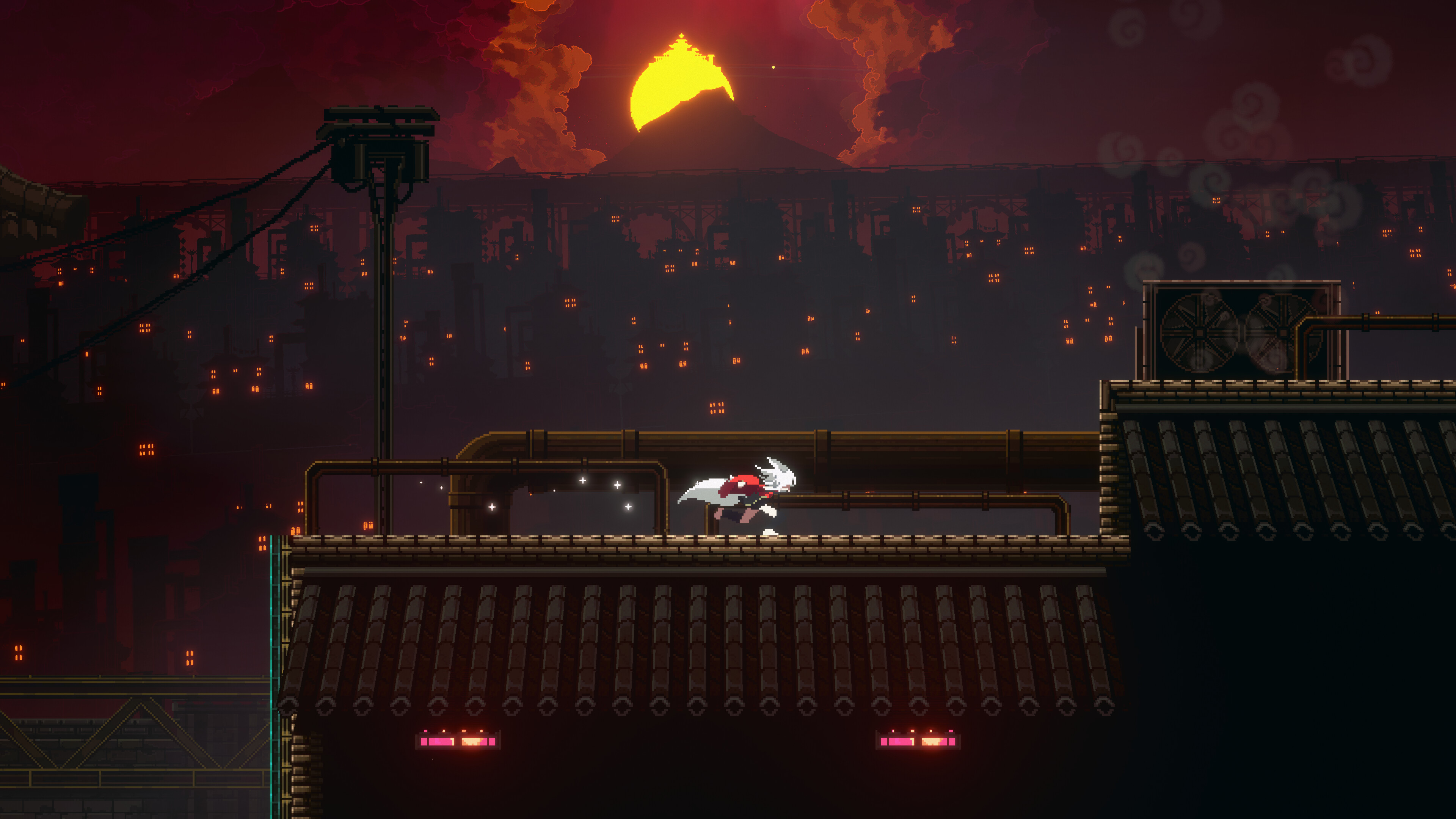
All this would fall apart if visuals got muddy or confusing—but Inari’s pixel art keeps things clean without losing flair. Each frame is crisp enough to read quickly while still delivering stylish slashes and spark-filled impacts when actions land right.
Enemies are easy to track across backgrounds even when chaos erupts onscreen—which matters more than flashiness when one bad read ends everything. Attacks light up space with purpose; animation sells momentum without drowning it in effects.
The aesthetic draws inspiration from Eastern mythology but twists it with hints of sci-fi—robes meet wires, shrines clash with gears—visually echoing the game’s story themes about old gods resisting new worlds being born beneath them.
Who should keep their eyes on Inari? Fans of difficulty, rebellion stories, and skill-first gameplay

This isn’t a game made for casual strolls or comfort-food storytelling—it targets players looking for friction and fire. Those who loved mastering Celeste’s strawberries or timing sword kills perfectly in Ghostrunner will find plenty here worth grinding through again…and again…and again until mastery clicks into place like a well-thrown kunai finding its mark.
Lore fans get something too—not sprawling backstory dumps but moments that ask real questions: what does it mean to carry out orders without belief? What happens when rebellion feels right but still falls under your blade?
The blend works because nothing pulls focus away from play—narrative threads run underfoot while combat stays center stage. And those who enjoy stories about rebellion versus control—especially ones without easy answers—will find Izna’s path both thrilling and grimly fascinating.
When does Inari come out?
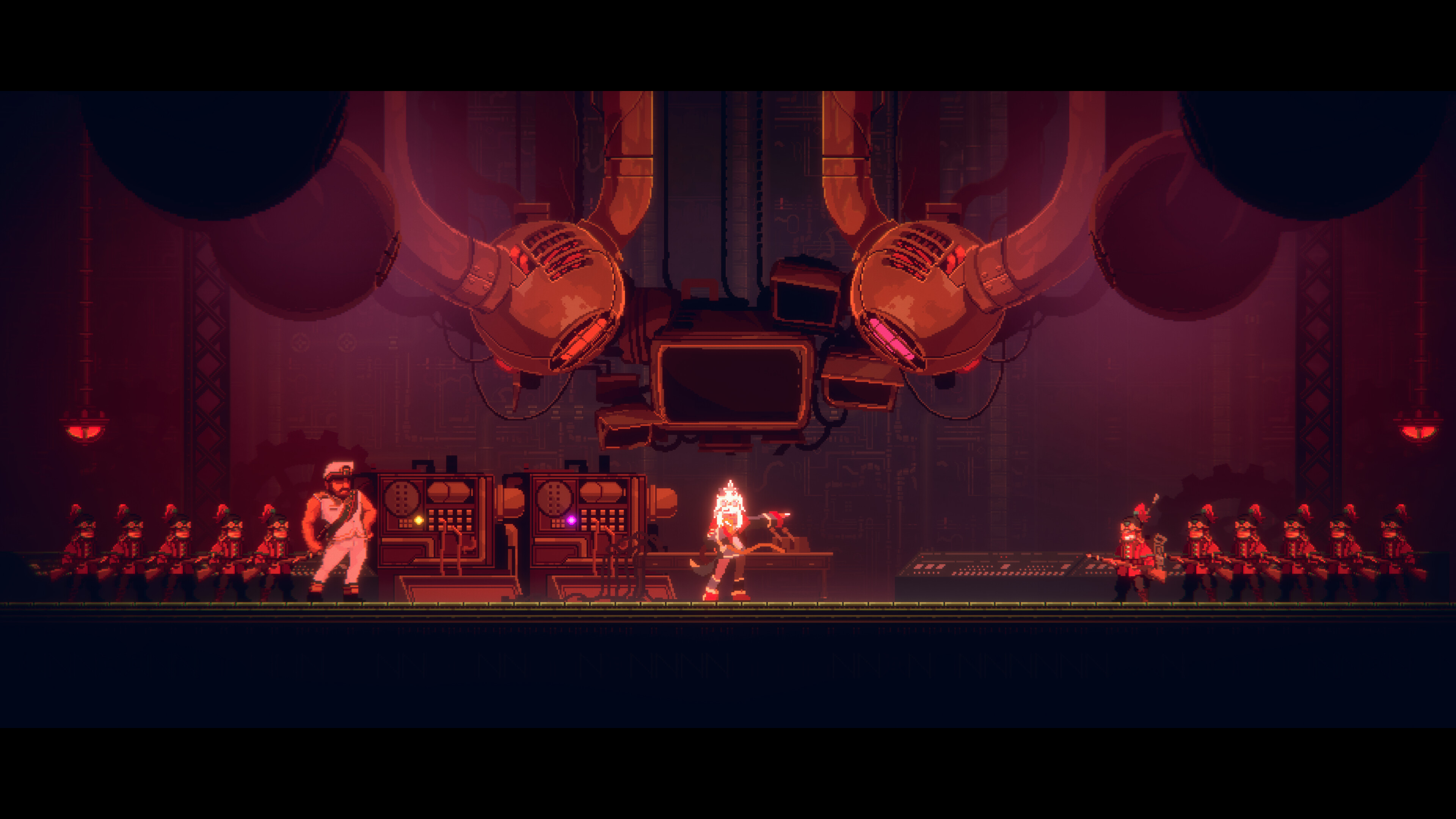
The demo for Inari drops January 13, 2026 alongside its Kickstarter campaign launch—a date likely marked red on calendars for fans craving precision punishment wrapped in mythic cyberpunk robes.
A quick word of warning: “Inari” is also the name of several other games already released—including a dating sim from Seikou Soft and another action title by Chowdahound launched back in 2023—so make sure you’re tracking the version developed by 1HP Studio if you want teleportation carnage rather than romantic fox spirits or unrelated pixel brawls.
This version promises tough love only—the kind dealt at kunai-point while ancient gods watch empires crack beneath your feet.
If each death serves purpose…how many will it take before Izna starts questioning her orders?
F.A.Q.
What type of game is Inari?
Inari is a fast-paced 2D action-platformer that combines kunai-based combat with instant teleportation mechanics. It’s set in an Eastern fantasy world where players must navigate high-speed, precise encounters with a single-life structure.
What platforms is Inari available on?
The article does not specify the platforms for Inari. However, it is important to track the game developed by 1HP Studio via their official channels or Steam for the latest updates on platform availability.
Does Inari have permadeath or a single-life structure?
Yes, Inari features a single-life structure for each encounter, which means players must approach every scenario with precision and care. One mistake can end the run, creating a high-risk, high-reward gameplay loop.
What is Inari about?
Inari follows Izna the Reaper, an executioner tasked by a powerful Lord to eliminate seven rebellious princesses who have defied divine rule. The game explores themes of divine authority clashing with rising technology in a morally gray narrative.
Is Inari similar to other games like Katana ZERO or Celeste?
Inari shares similarities with games like Katana ZERO and Celeste in terms of high-speed action, precision platforming, and a focus on mastering movement and timing. However, it distinguishes itself with a unique kunai-teleport mechanic that defines both combat and traversal.
When does Inari release?
The demo for Inari is set to release on January 13, 2026, alongside its Kickstarter campaign launch. Interested players can look forward to experiencing its precision-focused gameplay wrapped in a mythic cyberpunk aesthetic.
Does Inari have a unique combat system?
Yes, Inari’s combat system is built around the unique mechanic of throwing kunai and instantly teleporting to them. This system allows players to control space, momentum, and positioning in real-time, offering a distinct rhythm to the gameplay.