Six players sat down for a hands-on session of Big Walk, and not one of them shared a room, a couch, or even a text thread. According to Kotaku’s hands-on report, the group played on separate PCs and devices with no Discord call running in the background, left with nothing but a walkie-talkie, a few gestures, and a very big world to wander through together. That might sound like a recipe for mix-ups, but it turns out that’s exactly the cozy little magic trick the game is playing.
House House, the small studio behind Untitled Goose Game, built its follow-up around a strange little bet: that friends who cannot easily talk to each other will end up feeling closer than friends who can. Big Walk is set to launch August 4, 2026, on Steam, with the studio’s own materials pointing to plans for other platforms down the line, and it drops players into a shared open world where the goal is simply to find each other, solve puzzles together, and keep moving. There is no built-in text chat, no assumption that a Discord call is running alongside it. Communication happens through the game itself, and that limitation is doing a lot of quiet, deliberate work.
What Big Walk Actually Asks of Players
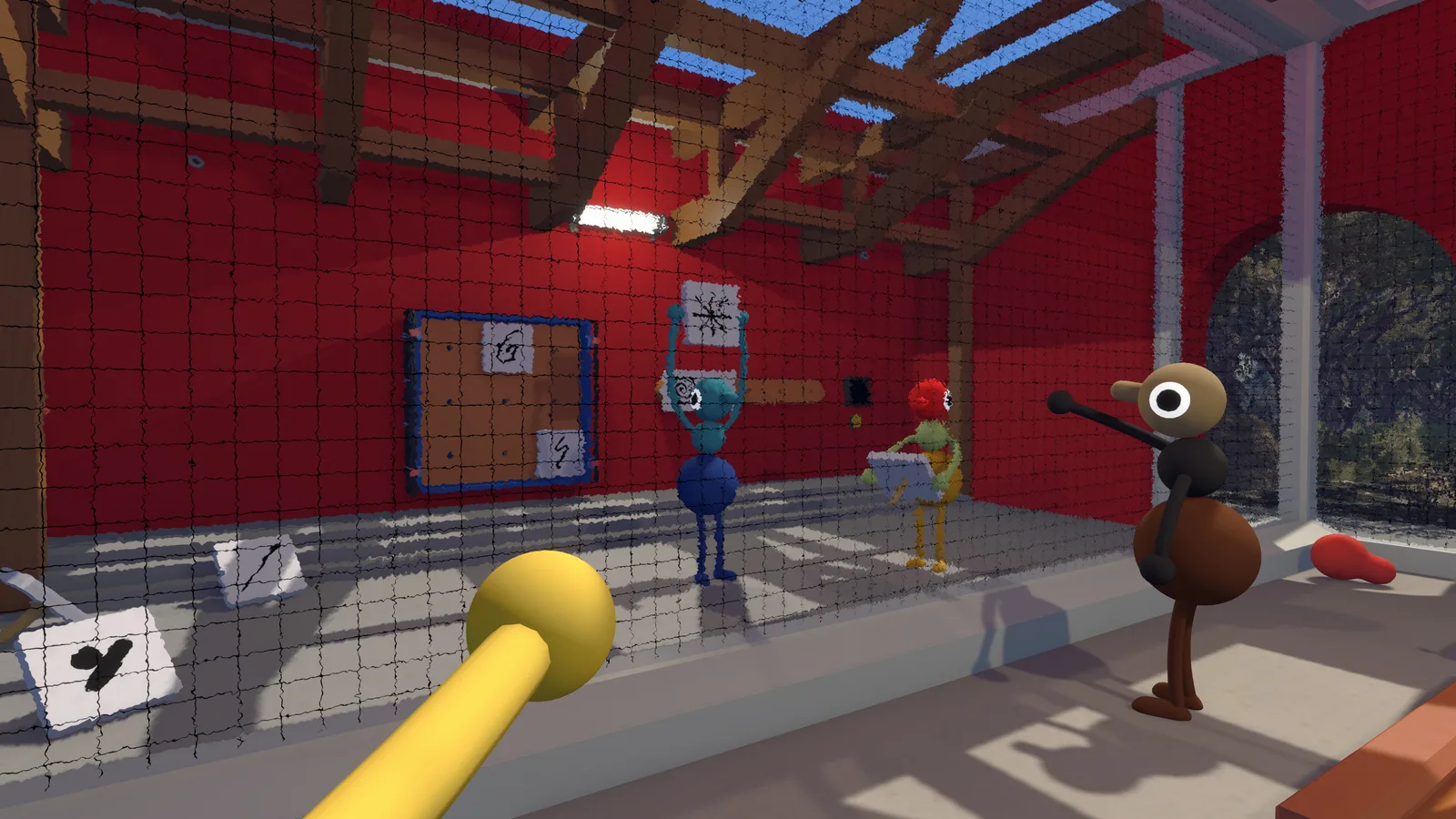
Big Walk supports anywhere from two to twelve players at once, all online, all crossing platforms freely thanks to the game’s built-in cross-platform multiplayer support.
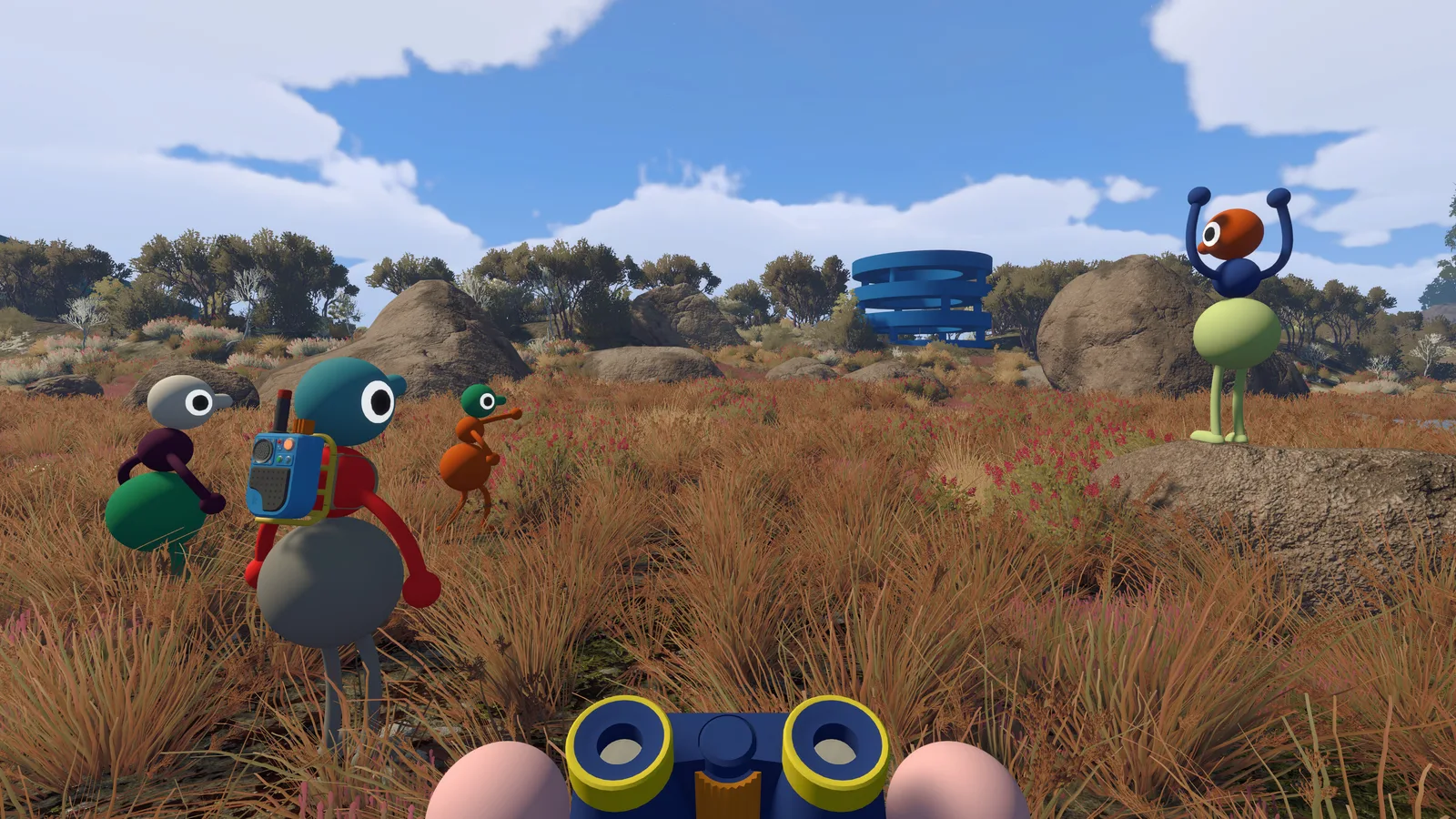
The bigger design choice sits inside the game itself. Players cannot simply chat with anyone, anywhere, at any time. Communication is gated by proximity or by finding specific tools scattered through the world, according to Kotaku’s hands-on report. When talking isn’t an option, players are meant to point, wave, and gesture their way through a moment instead. It’s a small shift on paper. In practice, it means the easy shortcut of typing “look left, there’s a switch” simply doesn’t exist unless a player has earned the tool to say it.
A Deliberate Reversal of House House’s Own Playbook
The contrast with House House’s last game is where the intent becomes obvious. Untitled Goose Game added a two-player mode that leaned on local, shared-screen play. Two geese, one screen, one system, one couch. Every design instinct pointed toward proximity making things easier.
Big Walk throws that instinct out entirely. It is built online-only from the ground up, and it actively avoids letting players lean on each other’s screens. That’s not an oversight from a studio that clearly understands how to build tight, shared-screen multiplayer when it wants to. It’s a studio choosing, on purpose, to remove the crutch it built the first time around.
Big Walk Isn’t Inventing This, It’s Joining a Lineage
Games that force players apart on purpose have a real history, and a good one. A number of well-known co-op titles have built entire experiences around asymmetric information, where one player sees something the other cannot, and success depends on describing rather than simply pointing. Neither that style of game works if everyone can see the same screen. That’s not a limitation players tolerate; it’s the reason those games are fun at all.
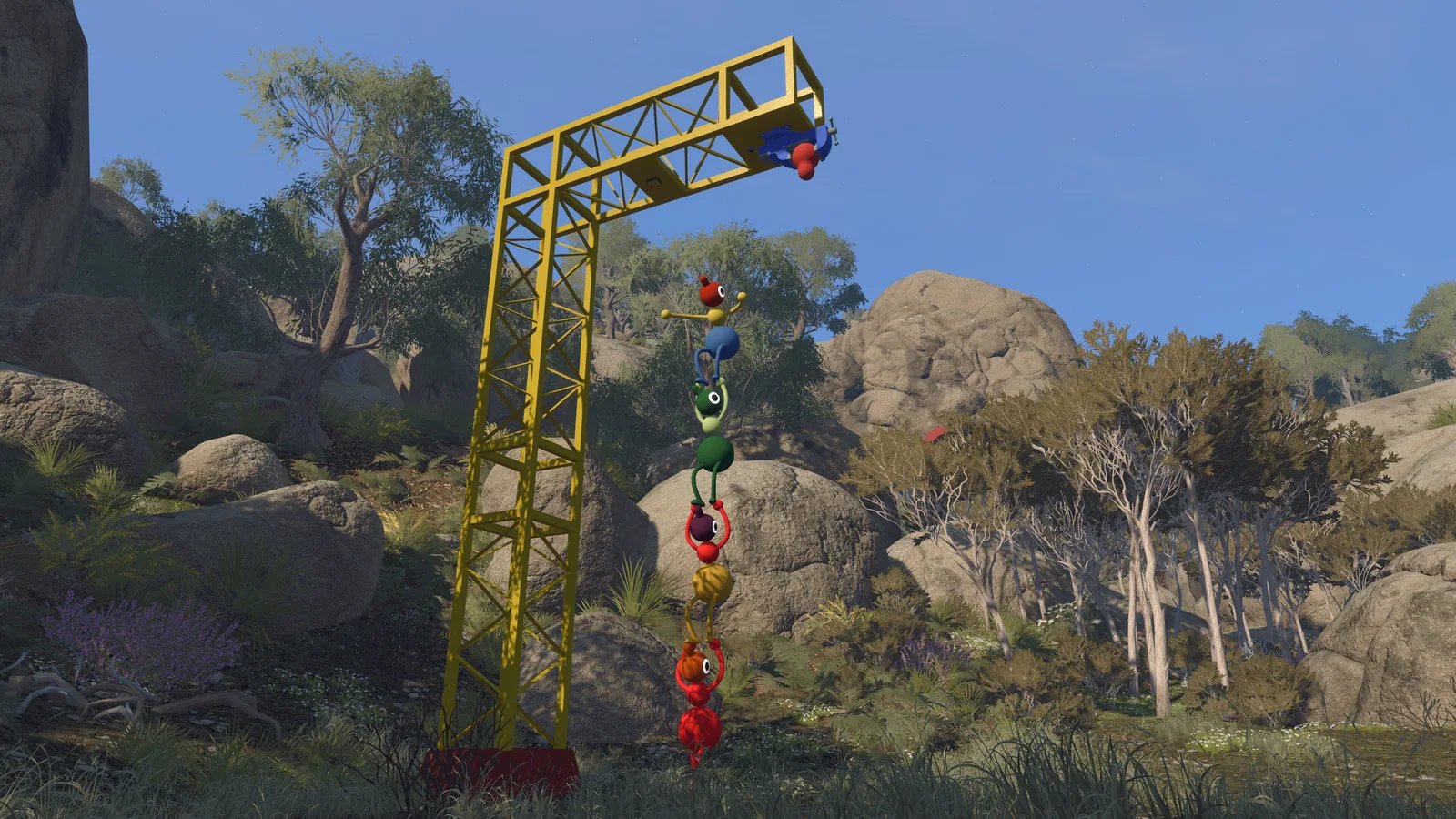
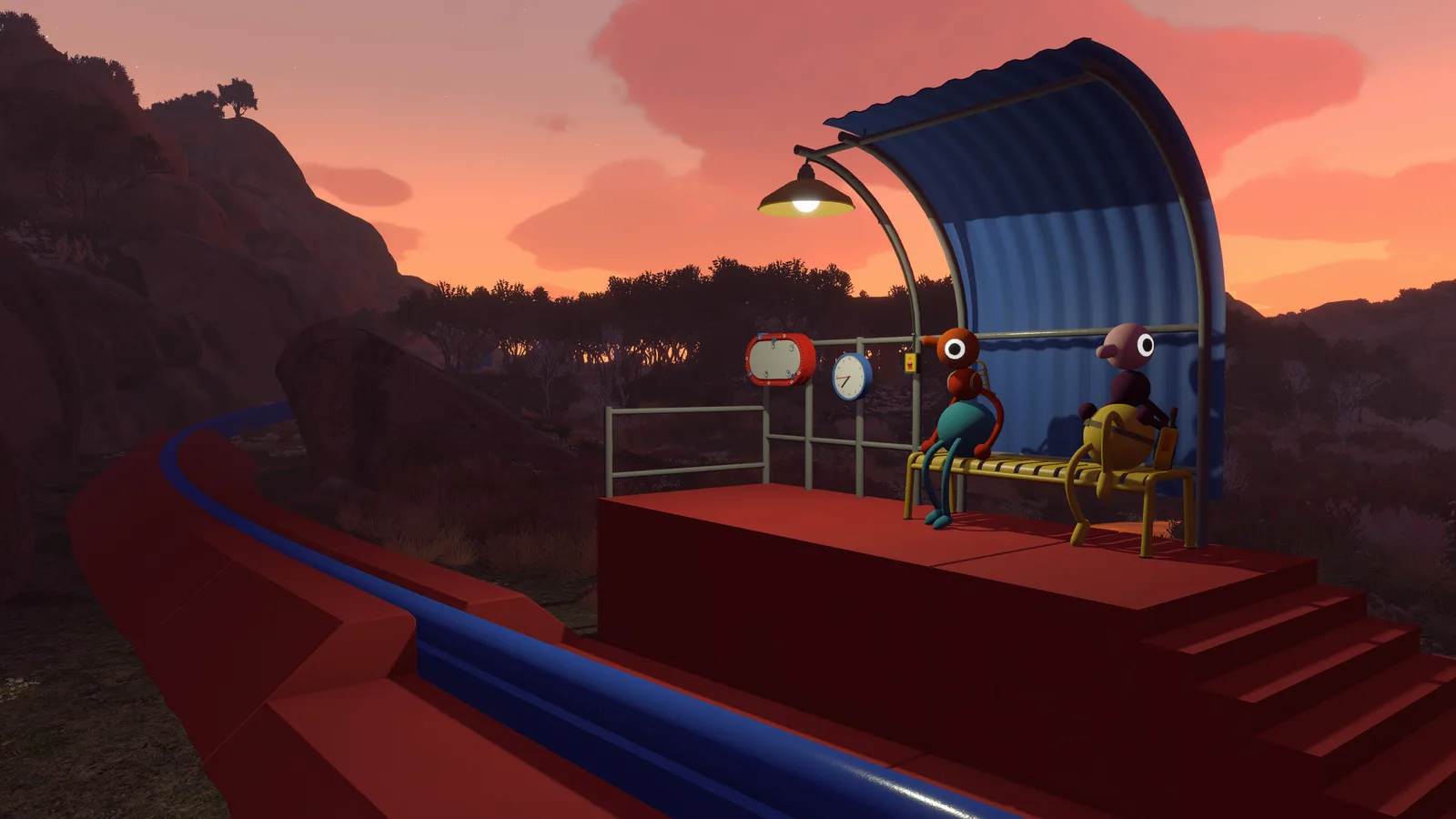
Big Walk slots into that same lineage, just stretched across a much bigger, more chaotic canvas. A puzzle box built for two players describing a single locked door is one kind of challenge. Twelve people spread across a sprawling open world, relying on flares and cowbells to find each other, is more like a big, sprawling Sunday brunch where half the table is still finding their seats, and House House’s own materials seem to embrace that, joking that the range runs from “a focused co-op experience” at two players to “an absolute mess” at twelve.
Borrowing Crossplay’s Infrastructure, Flipping Its Purpose

Crossplay itself isn’t new or unusual. The wider industry has leaned hard into the idea that friends should be able to play together no matter what hardware sits under the television, treating cross-platform play as a convenience that erases distance between people. Most co-op games today use crossplay exactly that way, as a bridge that makes hardware differences disappear so friends feel like they’re in the same room.
Big Walk uses the same underlying technology and points it in the opposite direction. Crossplay here isn’t about pretending everyone is together. It’s about making it possible for everyone to genuinely be apart, on their own device, in their own space, and still show up in the same shared world. The infrastructure is identical. The intention behind it is inverted.
The Part Worth Saying Plainly
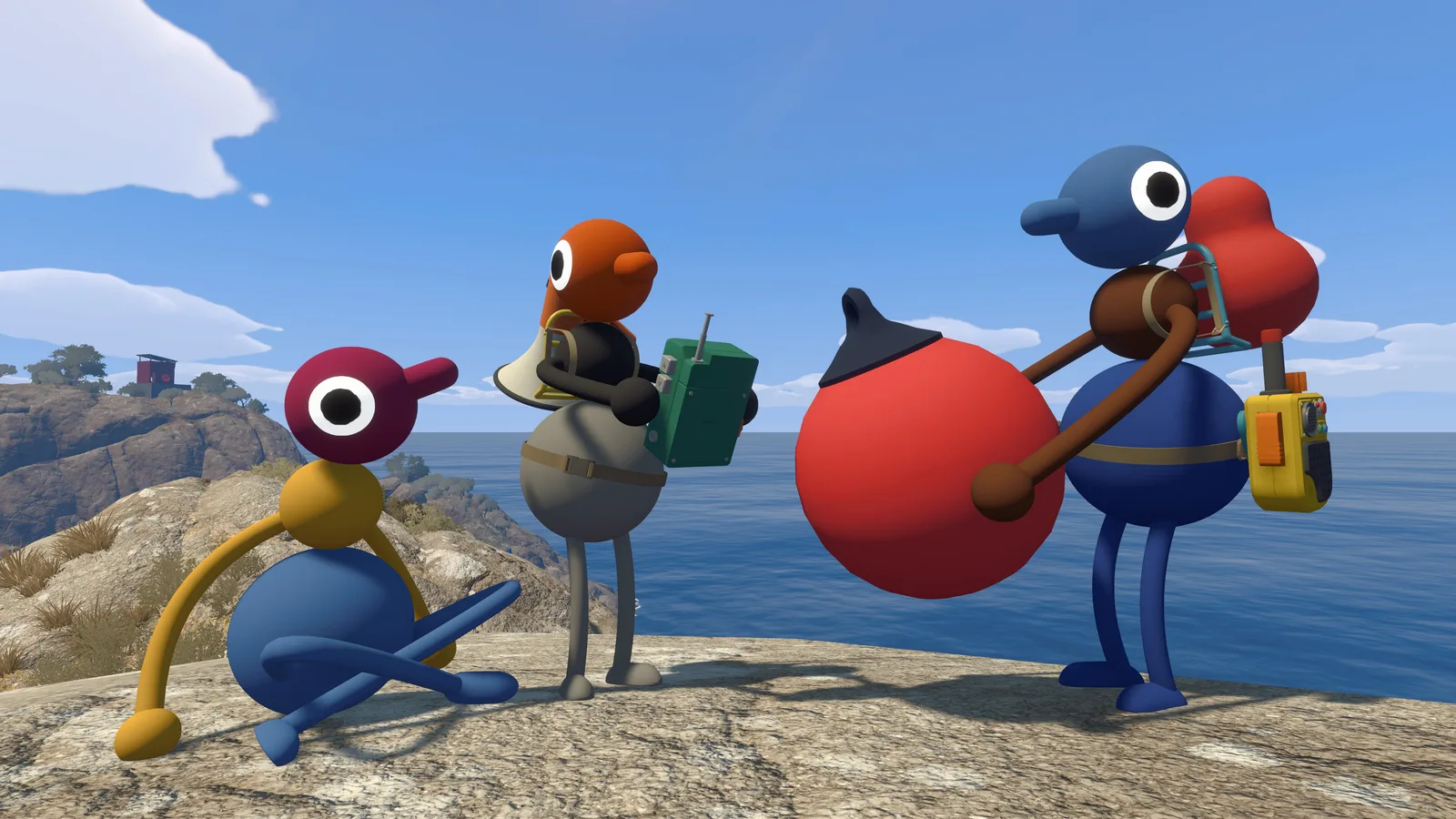


None of this comes without real cost to the people trying to organize a session. A full twelve-player game means twelve copies of the game, twelve devices capable of running it, and headsets for everyone involved since there’s no in-room chatter to fall back on. Some friend groups might find it tricky to get everyone online at the same time, and that’s perfectly okay. Kotaku’s own headline on the subject put it bluntly: “Not Everyone Will Be Able To Play Big Walk And That’s Okay.” That’s an unusually candid thing for a studio to be at peace with, and it says something about how confident House House is in the trade-off. A game this dependent on logistics isn’t accidentally exclusive. It’s asking a friend group to come together the way a good book club does, showing up, making the time, and trusting that the effort is part of the charm.
Couch co-op always let players get away with silence, since a quick glance or a pointed finger at the shared screen could carry an entire conversation. Big Walk removes that option on purpose, betting that twelve people scattered across twelve separate rooms, forced to actually describe what they’re looking at, might land closer to the real feeling of togetherness than any couch ever did. Whether that bet pays off comes down to something no trailer can answer: will scattering friends across devices and forcing them to talk actually bring them closer, or does the sofa still win?
📬 Get The BF5 — Best F’ing 5 games you missed this week, every Saturday, plus key giveaways. Subscribe free →
F.A.Q.
When does Big Walk come out?
Big Walk is set to launch on August 4, 2026, on Steam. This cooperative online game from House House emphasizes connecting with friends in a vast world, without traditional chat options.
What platforms is Big Walk on?
Big Walk will initially be available on Steam for PC. The developer has indicated plans for additional platforms in the future, though specific details about console releases are not yet confirmed.
Is Big Walk cross-platform?
Yes, Big Walk supports cross-platform multiplayer, allowing players on different devices to join the same game session. This feature enhances the game’s unique approach to cooperative play, where communication occurs primarily through gestures and proximity.
How much does Big Walk cost?
The price for Big Walk has not been officially announced yet, but it will be available for purchase on Steam upon its release. Players can expect competitive pricing typical for new indie games.
Is Big Walk worth it?
While it’s too early for reviews, Big Walk’s innovative gameplay mechanics, including limited communication and cross-platform support, suggest it offers a unique experience. Players looking for creative cooperative interactions may find the game engaging and worth exploring.
Does Big Walk have multiplayer?
Yes, Big Walk features multiplayer gameplay, supporting between two to twelve players online. This cooperative experience encourages players to work together in a shared open world, relying on gestures and proximity for communication.
BFG drafts articles with AI from our team’s research and verified store data — every piece is fact-checked and runs a multi-stage editorial review before publishing.