
Update (Aug 19, 2026): No Case Should Remain Unsolved is out now — get it on Steam.
No Case Should Remain Unsolved Hits PS5 August 19
Somi’s testimony-deduction mystery arrives on PlayStation 5 on August 19, 2026, bundled with merchandise. The game challenges players to untangle dozens of conflicting testimonies to determine the truth behind a twelve-year-old disappearance.
No Case Should Remain Unsolved is a testimony-sorting mystery that asks players to reconstruct a twelve-year-old disappearance from fragmented, contradictory statements, and it’s now making its way to PlayStation 5 on August 19, 2026, with a bundle of merchandise coming along for the ride. This is not the kind of detective game where players click around a crime scene hunting for a shiny clue. Instead, it hands over scraps of memory, all jumbled and out of order, and asks players to piece them together into a coherent timeline, one contradiction at a time. Fans of “The Case of the Golden Idol” or “Immortality” will feel right at home here, and the PS5 launch means console players who missed the PC release now get access to the same testimony-deduction structure without needing a gaming PC.
What Exactly Is This Gentle Little Mystery?
“No Case Should Remain Unsolved” comes from Somi, a South Korean indie studio with a real knack for quiet, thoughtful storytelling. The game leans on a comic-style art direction, blending flat 2D scenes with soft 2.5D touches that give everything a storybook feel. Underneath it all runs an original score by Seongyi Yi, the composer credited for “Legal Dungeon” and “The Wake.” Her prior work on Legal Dungeon and The Wake favored restrained, melancholic scoring, a good fit for a story built on quiet deception. The whole experience runs about two to three hours, which makes it feel like a lovely afternoon visit rather than a long commitment. Short does not mean shallow, though. This is a game built to be turned over in the mind long after the credits roll, maybe even replayed with fresh eyes.
The Story at the Heart of the Case
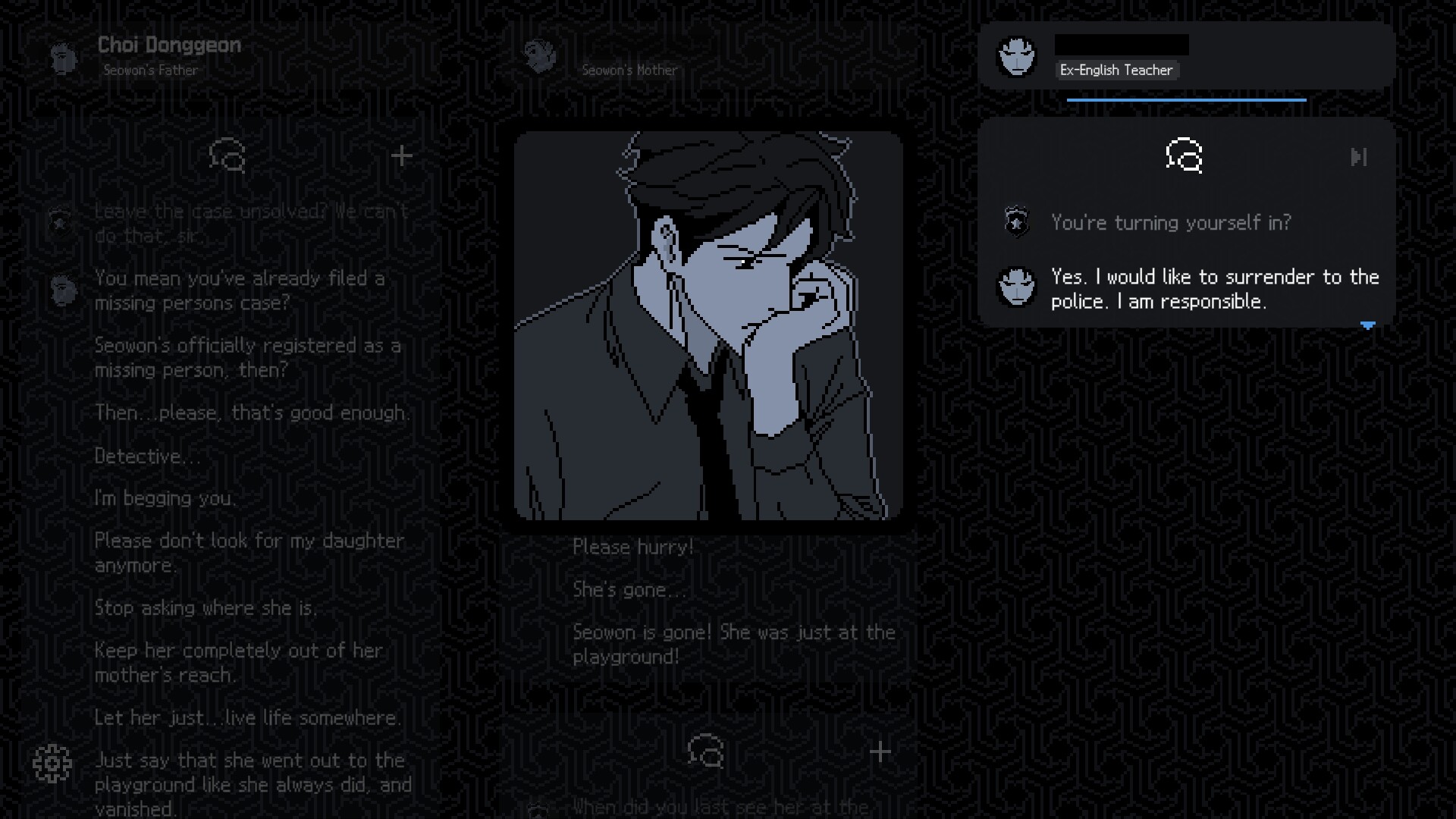
Players step into the worn-in shoes of Jeon Gyeong, a retired Senior Inspector who thought his case-solving days were behind him. Twelve years after a young girl named Seowon disappeared, he gets pulled back into the fold to take another look at everything. The catch, and it is a big one, is that everyone connected to the case lied about something. Nobody gets to sit comfortably above suspicion. The real puzzle is not simply naming a culprit in the usual sense. It is figuring out which lies actually matter, how they connect, and what truth they are quietly covering up. What makes the mystery structurally interesting is how it withholds culpability until motive and timeline align, refusing to hand over a clear villain until every contradiction has been accounted for.
So How Does Someone Actually Play This?
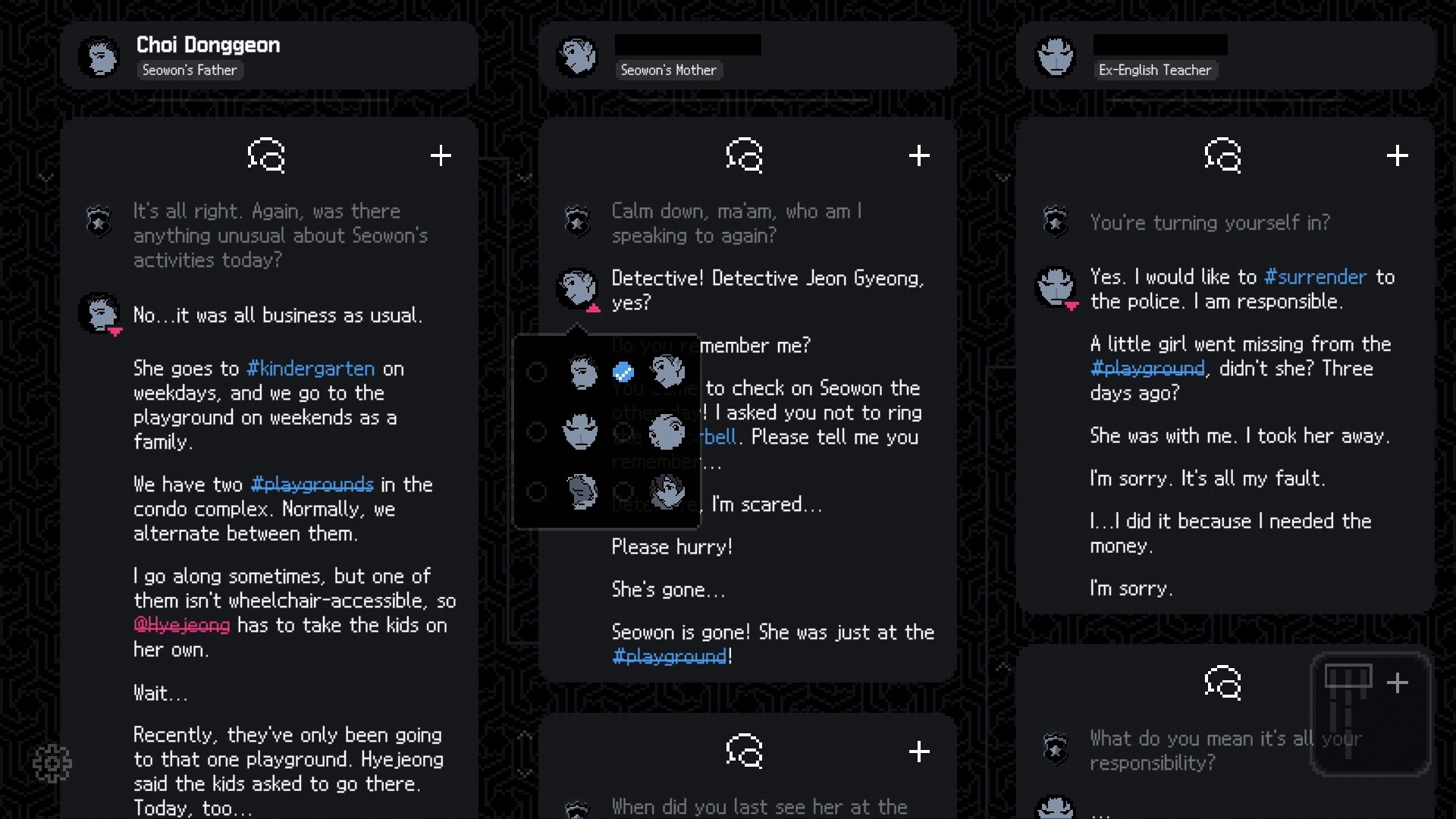


There is no wandering around clicking on suspicious objects here. Instead, players receive testimonies with no names attached and no sense of when they happened. The job becomes figuring out who said each line and when it fits into the bigger timeline. To do this, players select keywords tucked inside existing conversations, things like a location, a name, or even a simple word like “park” or “lie.” Choosing the right keyword nudges a memory loose and unlocks new testimony to work with. It plays out like assembling a jigsaw puzzle made entirely of contradictions, each piece only fitting once the surrounding pieces make sense. Across the full playthrough, there are 54 conversations to sort through, along with passcodes, keys, and two deeper truths waiting to be uncovered. It sounds like a lot, but the game paces it all out gently, never overwhelming, always inviting another look.
Why This Deduction System Feels So Special
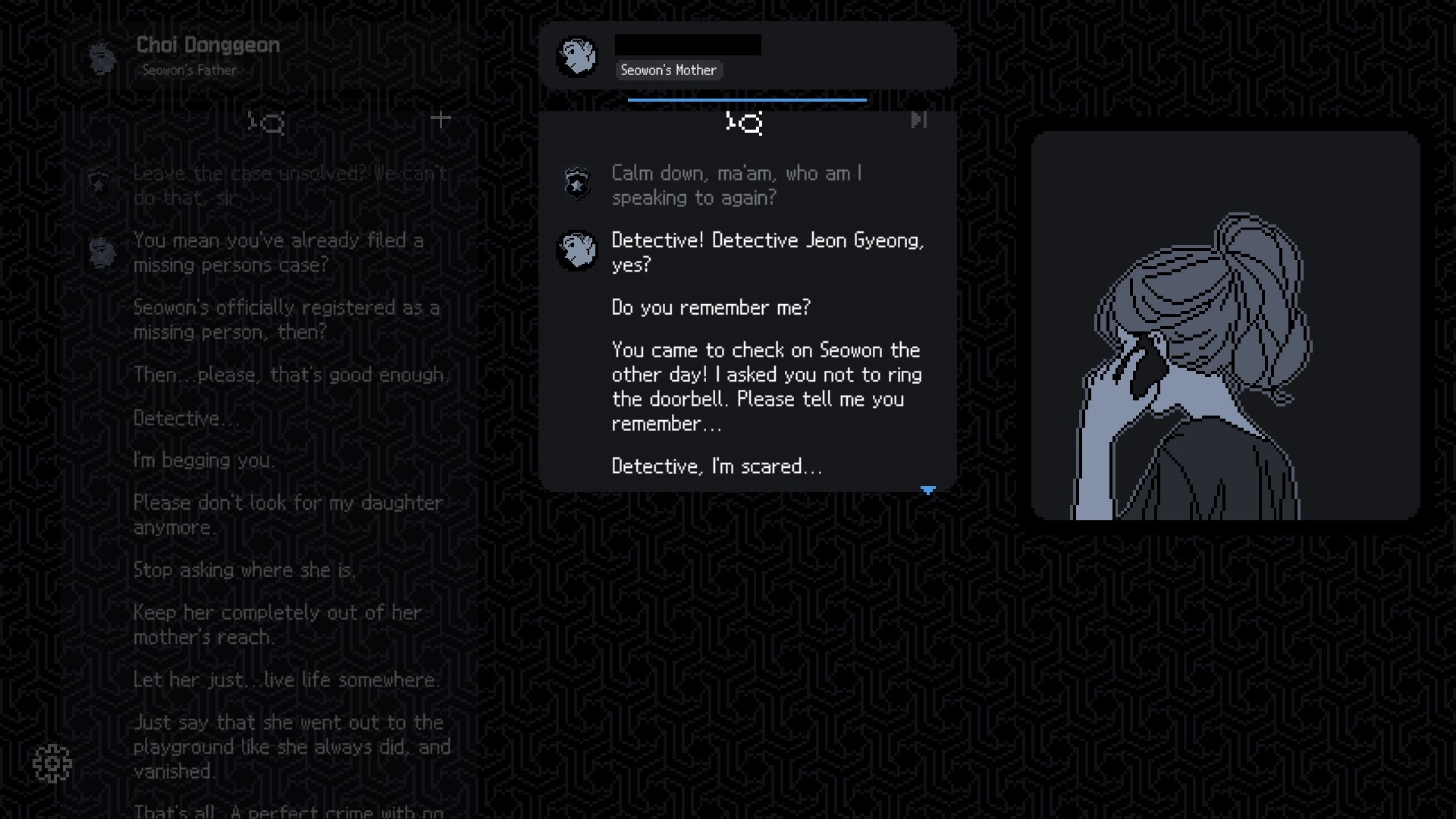
Anyone who has spent time with “The Case of the Golden Idol” will recognize that same joy of connecting scattered words into a clear picture, but the two games ask players to work in fundamentally different ways. Golden Idol presents a static crime scene where players scan for clickable clues, then drag words onto a deduction board to fill in blanks like names or objects, largely working forward from evidence toward a conclusion. Here, the mechanic runs in reverse: players select keywords embedded directly inside dialogue they’ve already read, and that selection unlocks new testimony rather than filling in a fixed board. There is no visual scene to scan, only accumulating text, so progress depends on recognizing which word in a conversation is the thread worth pulling rather than which object in a room looks suspicious. Then there is a touch of “Immortality” in how the story unfolds through fragments rather than a straight line. What makes this one stand out is how much weight each testimony carries. Slot a single piece into the wrong spot on the timeline, and the whole story can shift beneath the player’s feet. There are two distinct endings waiting at the finish line, and which one a player reaches depends entirely on how carefully they read between the lines.
Why This Feels Like Such a Rewarding Little Adventure

Where Golden Idol often plays like working through a checklist, ticking off deductions until the board is clear, this game ties real narrative weight to every single testimony, making each choice feel more consequential than a simple box to check. Successfully spotting a lie, then watching how it reshapes everything that came before it, delivers a genuine little spark of pride. At two to three hours, the game is built around its branching endings rather than sheer length, so a second playthrough functions less as a replay and more as a way to test how a different keyword choice reroutes the same set of testimonies toward a different outcome. The whole “everyone lies” premise carries a quiet message about how shaky human memory really is, and that idea is not just tucked into the story, it lives right inside the gameplay itself.
When Does No Case Should Remain Unsolved Come Out?

Mark the calendar for August 19, 2026, when the PlayStation 5 version officially arrives. Merchandise is set to launch alongside it, though exact details on what that includes have not been shared yet. The game comes from Somi, the South Korean indie studio behind this whole clever little mystery box. Anyone who enjoyed puzzling their way through “The Case of the Golden Idol” or piecing together the fractured storytelling of “Immortality” should feel right at home here.
What might be more nerve-wracking, sitting with the uncertainty of an unsolved case, or knowing that one wrong guess could quietly rewrite the ending?
F.A.Q.
When does No Case Should Remain Unsolved come out?
No Case Should Remain Unsolved is set to release on PlayStation 5 on August 19, 2026. This launch will also include a bundle of merchandise, although specific details about the merchandise have not been disclosed yet. The game previously launched for PC users.
What type of game is No Case Should Remain Unsolved?
No Case Should Remain Unsolved is a text-based mystery adventure game. Players work to solve a cold case by piecing together fragmented and contradictory testimonies to reconstruct a coherent timeline. The gameplay focuses on deduction rather than traditional point-and-click mechanics.
Does No Case Should Remain Unsolved have multiple endings?
Yes, No Case Should Remain Unsolved features two distinct endings. The ending a player achieves depends on how accurately they piece together the fragmented testimonies and uncover the hidden truths within the game. This structure provides replayability and rewards careful deduction.
Is No Case Should Remain Unsolved worth it?
No Case Should Remain Unsolved offers a unique and rewarding puzzle experience for fans of mystery and deduction games. Its short 2-3 hour playthrough, combined with complex logic challenges and a distinctive art style, makes it a worthwhile adventure for players seeking an engaging narrative.
What platforms is No Case Should Remain Unsolved available on?
No Case Should Remain Unsolved is available on PC and will launch on PlayStation 5 on August 19, 2026. This allows both PC and console gamers to experience the unique testimony-deduction gameplay without the need for high-end gaming hardware.
How does the deduction system in No Case Should Remain Unsolved work?
The deduction system in No Case Should Remain Unsolved requires players to select keywords from dialogues to unlock new testimonies. This system resembles a jigsaw puzzle, where players connect disjointed pieces to form a complete picture of the narrative, focusing on logic rather than observation.
BFG drafts articles with AI from our team’s own research, takes, and opinions — every piece is reviewed and edited by our staff.