Most platformers live and die by the jump button. It’s the foundation — the one input that defines how players move, how levels are built, and how challenge is measured. Moonbrella, a physics-based 2D Metroidvania from Australian developer Jett Williams, throws that foundation out entirely and replaces it with something far more interesting: an umbrella.
Forget Everything About How Platformers Usually Feel
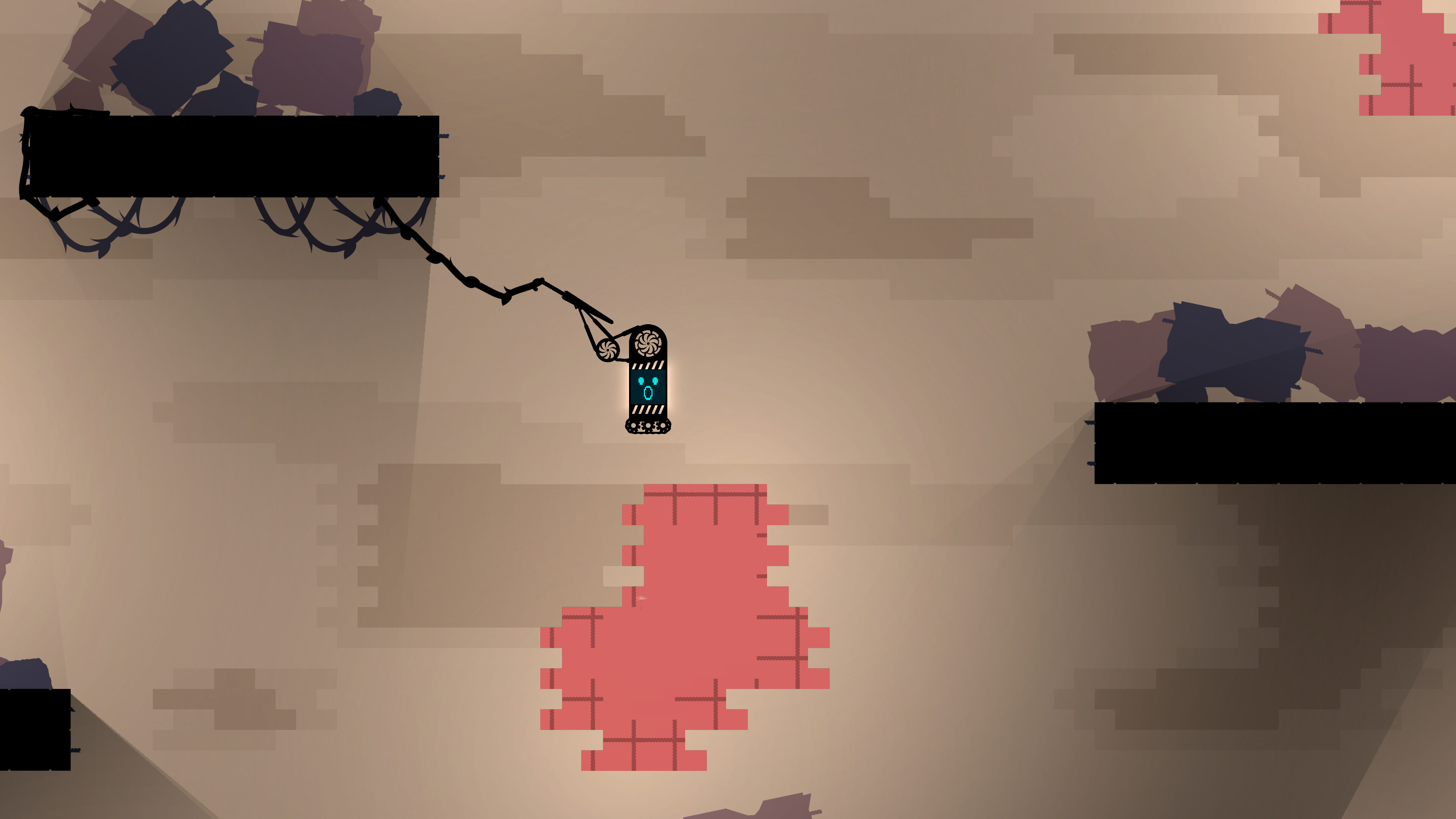
The jump button is gone. Not hidden. Not remapped. Gone. In Moonbrella, players move through the world using three umbrella-based techniques, and the entire game is built around making those three things feel like enough — because they are.
The first technique is jabbing. Players thrust the tip of the umbrella into terrain to vault over obstacles. It’s the closest thing to a traditional jump, but it requires reading the environment rather than just pressing a button on instinct. The second is floating — opening the canopy to slow a fall and drift across longer gaps. It’s the most forgiving of the three, giving players time to breathe and think. The third is hooking, where the handle latches onto ledges and vines to pull the player upward or swing them into momentum. Each technique has a clear purpose, but the real skill comes from chaining them together.
Prod has played enough Metroidvanias to know when a movement system is a gimmick and when it’s the real thing. What Williams has built here reads like the latter. These aren’t three separate tools bolted onto a standard platformer — they’re one unified physics-driven system where every action feeds into the next. Jabbing into a wall, floating across a gap, and hooking a vine to swing to the other side isn’t three separate inputs. It’s one fluid sequence, and getting good at Moonbrella means learning how to read that sequence before executing it.
Williams also designed the movement system with speedrunners in mind. Most platforming challenges have multiple solutions, meaning skilled players can find faster and more creative routes through the same spaces a casual player might float through slowly. That’s a deliberate design choice — a signal that this isn’t a shallow concept but a system built to reward mastery over time.
An Abandoned Planet That Rewards Players Who Dig Deeper
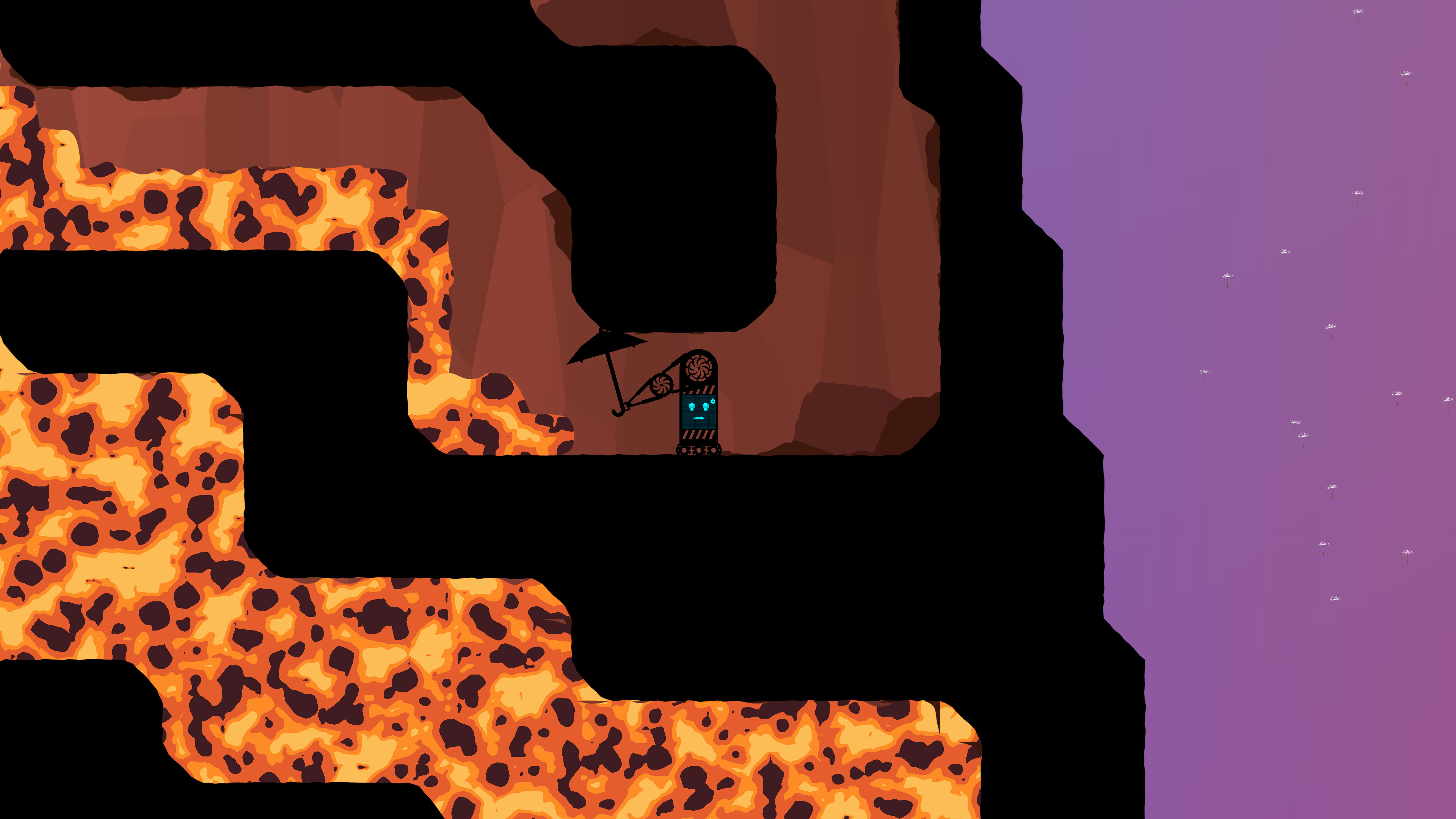
The world of Moonbrella is an abandoned planet. Players take control of a lone robot left behind when humanity departed, and the environment reflects that emptiness. Dark caves, ancient structures, and active volcanoes make up the terrain, each area distinct enough to keep exploration from feeling repetitive.
Progression works the way Metroidvania fans expect — find new umbrella parts, unlock new movement abilities, return to areas that were previously out of reach. It’s the classic gating loop, but filtered entirely through the umbrella framework. An upgrade isn’t just a stat boost. It changes how the player can physically move through the world, which changes which paths are open and which are still blocked. That’s a clean design relationship between tool, ability, and exploration.
The interconnected world structure means backtracking has purpose. A cave that seemed like a dead end early on might open up entirely once a new hooking ability is unlocked. Players who pay attention to the layout will find themselves building a mental map of the planet — noting which ledges they couldn’t reach, which vines they couldn’t grab, and planning a return visit. That kind of spatial thinking is what separates a good Metroidvania from a great one.
A Quiet Story Running Beneath the Surface
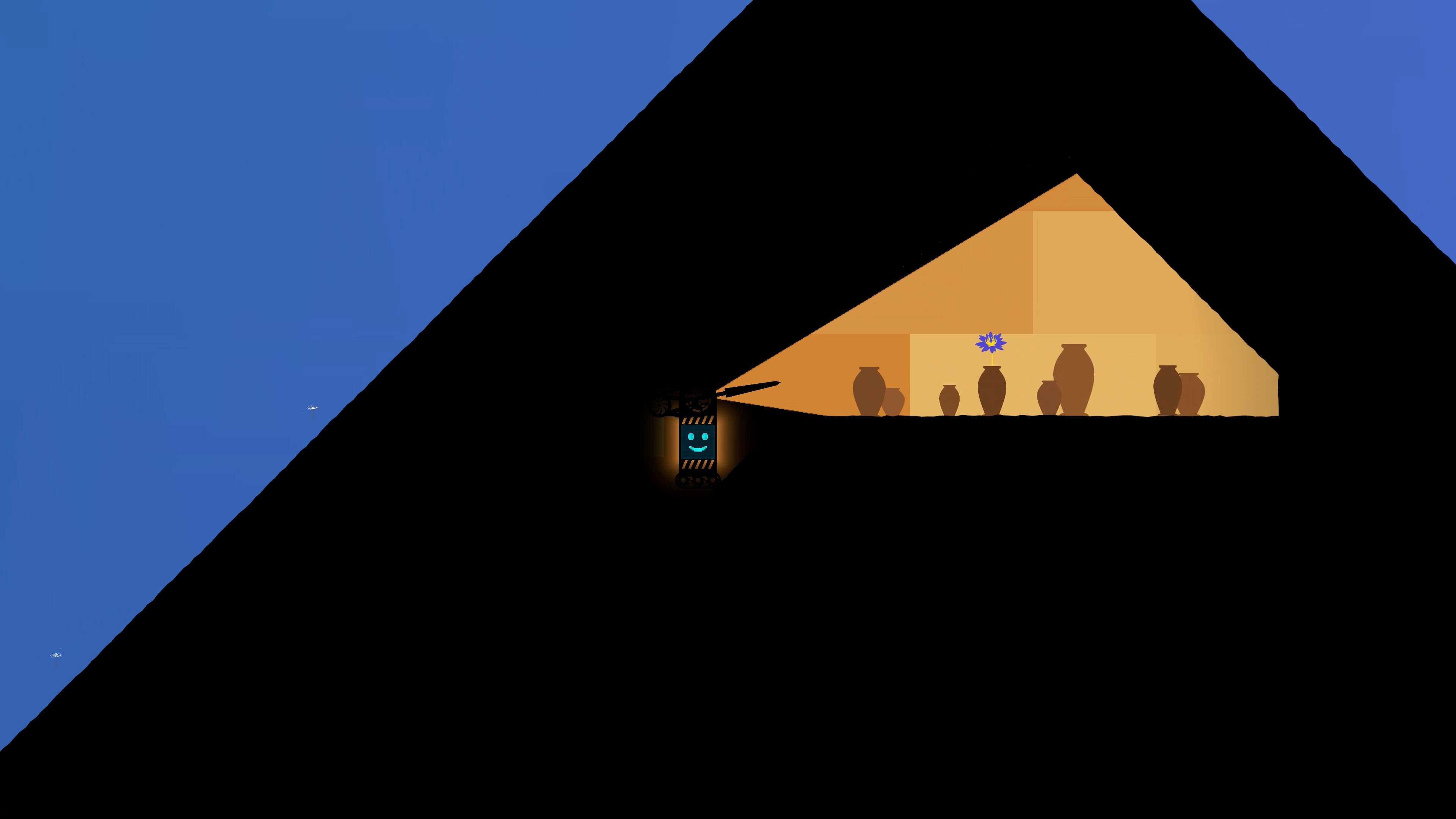

The story in Moonbrella is understated, and that feels intentional. The robot protagonist is piecing together what happened to the humans who left the planet behind. There’s no loud narrative driving the player forward — instead, the mystery sits quietly in the background while the platforming takes center stage.
The emotional core of the game is a dying sunflower trapped in the shadow of the moon. The player’s goal is to revive it. Flowers and gemstones are scattered across the world as collectibles, giving exploration a tangible purpose beyond just finding the next upgrade. It’s a small, melancholy throughline — a lone robot on an empty planet, trying to save a single living thing. That contrast between the mechanical demands of the movement system and the quiet sadness of the story is an interesting creative choice, and it gives the game a tone that feels different from most platformers in the genre.
Why Moonbrella Deserves a Spot on the Watchlist

The Metroidvania genre is not short on entries. New ones arrive regularly, and most follow familiar patterns. Moonbrella earns attention for a few specific reasons that go beyond surface-level novelty.
Removing the jump button entirely is a real commitment. Plenty of games add unusual movement tools alongside standard controls — a grapple hook here, a dash there. Stripping out the jump and forcing players to work within a single system is a different design philosophy altogether. It either holds together as a cohesive experience or it collapses. Based on what Williams has described, the system has been thought through carefully enough to hold.
Physics-based movement is also rare in this genre. Most Metroidvanias use tight, predictable controls because predictability is what makes precision platforming feel fair. Grounding traversal in physics introduces variables — a jab might send the player further than expected, a float might drift in a direction that requires correction. That raises the skill ceiling and opens up emergent solutions that a more rigid system wouldn’t allow. It’s a meaningful trade-off, and one that signals Williams is comfortable building something that takes time to master.
Prod has a particular appreciation for games that manage to serve two different types of players without watering down the experience for either. Moonbrella appears to be attempting exactly that. A casual player can float and hook through the world at a relaxed pace, enjoying the environments and the story. A speedrunner has a physics system built specifically to reward creativity and route-finding. Pulling off both without compromising either is genuinely difficult, and the fact that it was a stated design goal from the start suggests Williams understands the challenge.
When Does Moonbrella Come Out?

Moonbrella is set to release in 2026 across PC via Steam, Nintendo Switch, PlayStation 4, PlayStation 5, Xbox One, and Xbox Series X|S. No specific release date has been announced beyond that window. The Steam page is the best place to wishlist the game and stay updated as more details emerge from Jett Williams.
A lone robot, an empty planet, a dying sunflower, and an umbrella that does everything a jump button never could — it’s a strange pitch, but it’s a compelling one. The question now is whether the physics hold up under the pressure of a full game’s worth of platforming challenges, and whether that no-jump commitment pays off in the way Williams clearly believes it will. Will removing one button be the thing that makes Moonbrella memorable, or the thing that holds it back?
F.A.Q.
What type of game is Moonbrella?
Moonbrella is a physics-based 2D Metroidvania platformer developed by Australian developer Jett Williams. It features an interconnected world set on an abandoned planet, umbrella-based movement mechanics, and a progression system built around unlocking new abilities to access previously unreachable areas — all hallmarks of the Metroidvania genre. What sets it apart is its physics-driven approach to traversal and the complete removal of a traditional jump button.
When does Moonbrella come out?
Moonbrella is scheduled to release in 2026. No specific release date beyond that window has been announced. The best place to stay updated and wishlist the game is the official Moonbrella Steam page.
What platforms is Moonbrella on?
Moonbrella is coming to PC via Steam, Nintendo Switch, PlayStation 4, PlayStation 5, Xbox One, and Xbox Series X|S. The game is planned for a simultaneous multiplatform release in 2026, covering both current and previous generation consoles alongside PC.
Does Moonbrella have a jump button?
No — and that’s the point. Moonbrella removes the jump button entirely and replaces it with three umbrella-based movement techniques. Players vault over obstacles by jabbing the umbrella tip into terrain, drift across gaps by opening the canopy to slow a fall, and climb or build momentum by hooking the handle onto ledges and vines. The entire game is built around mastering and chaining these three techniques rather than relying on a traditional jump.
Is Moonbrella good for speedrunning?
Speedrunning was a deliberate design consideration for Moonbrella. Developer Jett Williams built the movement system so that most platforming challenges have multiple solutions, allowing skilled players to find faster and more creative routes through the same spaces a casual player might approach more slowly. The physics-based nature of the system also raises the skill ceiling, creating emergent routing possibilities that a more rigid control scheme wouldn’t allow.
What is Moonbrella about?
Moonbrella follows a lone robot left behind on an abandoned planet after humanity departed. The robot’s goal is to revive a dying sunflower trapped in the shadow of the moon. The story is understated — the mystery of what happened to the humans sits quietly in the background while the platforming takes center stage. Flowers and gemstones scattered across the world serve as collectibles, giving exploration a purpose tied to the game’s quiet, melancholy narrative.
Is Moonbrella good for casual players?
Moonbrella appears designed to work for both casual players and those seeking a deeper challenge. Casual players can float and hook through the world at a relaxed pace, enjoying the environments and story without needing to master every technique. At the same time, the physics-based movement system and multi-solution level design reward players who invest time in learning the mechanics. Serving both audiences without compromising either was a stated design goal from developer Jett Williams.