


Anyone who spent The Last Guardian gripping a controller while a wounded, terrified Trico refused to jump a gap already knows the specific ache this list is chasing. Neva, Nomada Studio’s 2024 follow-up to Gris, builds its entire structure around a wolf pup that grows up over the course of the story, and that growth actually rewires how she moves and fights alongside the player. That’s a rarer commitment than it sounds, since most animal companions in games are set dressing that never really changes. What follows is a short list of games for players who want that same feeling: watching something small and scared become something strong, and knowing it happened because they kept it alive.
5. Brothers: A Tale of Two Sons — Companionship Without a Growth Arc, and Still Devastating

Brothers doesn’t ask its two boys to level up or physically change shape, and it doesn’t need to. Josef Fares’ 2013 adventure controls both brothers with a single controller, forcing constant cooperation between two characters who never stop needing each other. The emotional weight comes from the relationship itself, not from any visible transformation.
Placing it here draws a clear line under what Neva does differently. Brothers proves companionship alone, without a mechanical growth system attached, can still land a gut punch. It’s a fitting entry point for players who want to test whether the “bond” part of this genre appeals to them before committing to something with combat and traversal systems layered on top.
This one is for players who want the emotional architecture of Neva stripped down to its simplest form, and who don’t mind a shorter, quieter runtime to get there.
4. ICO — The Genre’s Founding Template, and the Baseline Neva Pushes Past
Fumito Ueda’s ICO, released back in 2001, is where the “protect a fragile companion” genre effectively starts. Players guide Ico through a crumbling castle while holding hands with Yorda, pulling her across gaps and shielding her from shadowy creatures that try to drag her away. It’s tender, minimalist, and still holds up as a piece of game design.
The key distinction is that Yorda stays fixed. She doesn’t get stronger, faster, or more independent as the game progresses; she remains a dependent variable the player manages from start to finish. That’s not a criticism of ICO so much as a description of the template it built, one that countless escort-style companion games have leaned on since. Neva’s wolf pup starts in roughly that same vulnerable place, cowering from enemies and struggling with big jumps, but she doesn’t stay there.
Anyone curious about where this whole design lineage began, and who wants to see the fixed baseline before watching Neva break from it, should start here.
3. Gris — Nomada Studio’s Own Breakout, and the Reason Neva Feels the Way It Does

Before Neva, there was Gris, Nomada Studio’s 2018 watercolor meditation on grief. It has no dialogue, no combat, and no companion in the traditional sense, just a young woman moving through a world that visually falls apart and rebuilds itself as she processes loss. It became one of the definitive art-driven indie games of its decade for good reason.
Understanding Gris explains a lot about why Neva’s restraint hits as hard as it does. Nomada Studio built its reputation on expressive, minimal-UI storytelling, and Neva carries that visual language forward while adding the combat and companion systems Gris never touched. TheGamer covered the studio’s move from Gris to Neva, noting the shift toward adding combat and a four-legged companion while carrying that same visual and emotional sensibility forward.
This is the pick for anyone who wants to trace Neva’s artistic DNA back to its source, or who simply wants another dose of Nomada Studio’s particular brand of quiet heartbreak.
2. Season: A Letter to the Future — Neva’s Tone, Minus the Combat
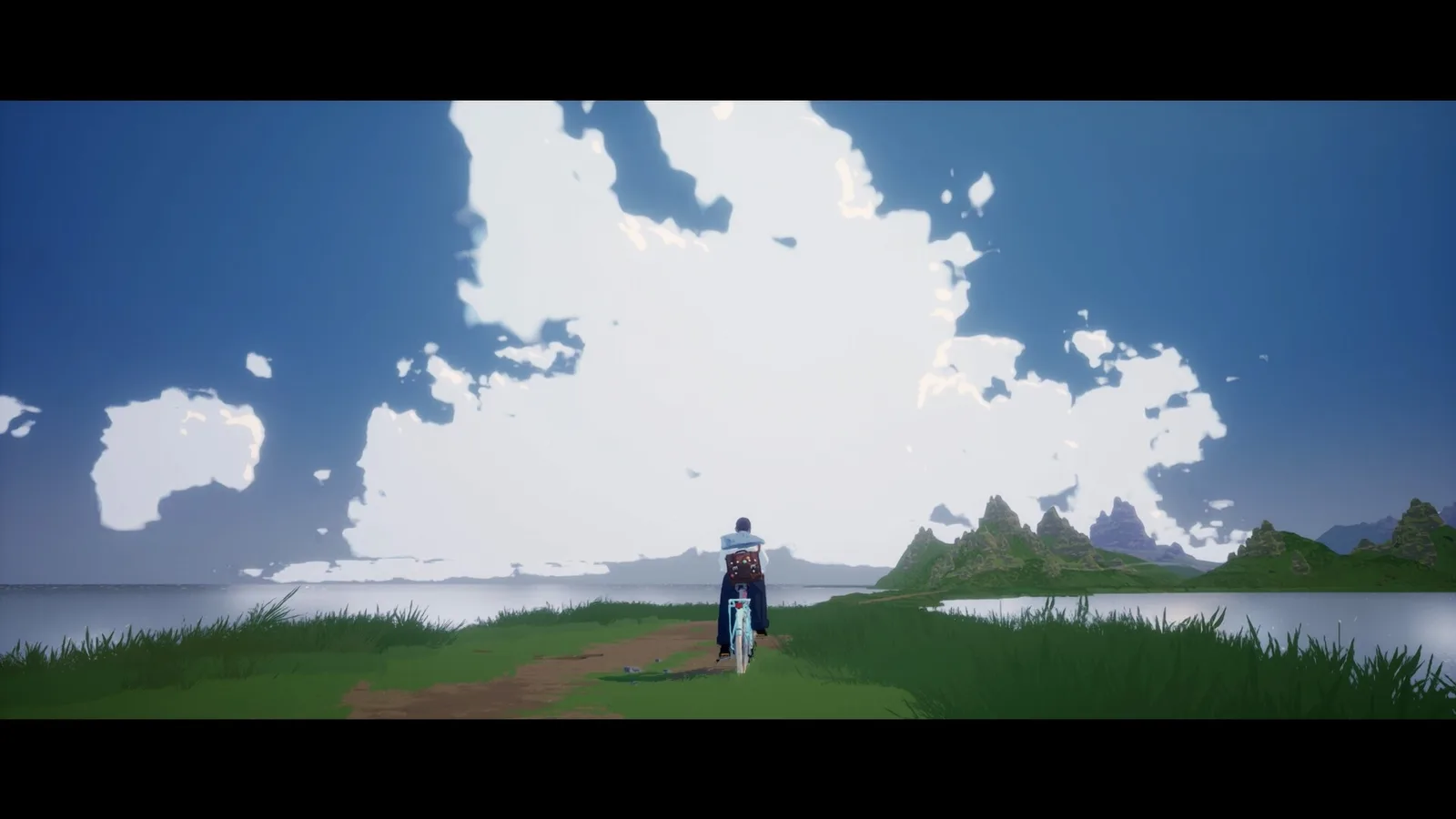
Season: A Letter to the Future shares more than a passing resemblance with Neva. Neva and Season are both art-driven indies preoccupied with loss and the passage of time. Season follows a young woman cycling through a changing world on her bicycle, recording sounds and images before that world disappears for good.
There’s no wolf pup here, and no combat system tracking growth, but the thematic overlap with Neva is hard to miss. Both games treat change and impermanence as the emotional engine of the experience rather than an obstacle to overcome.
This one suits players drawn to Neva’s mood and pacing but who would rather skip the side-scrolling combat encounters entirely in favor of pure exploration and reflection.
1. The Last Guardian — The Ancestor Neva Actually Improves On
The Last Guardian is the clearest predecessor to what Neva is doing, and it earns the top spot because Neva doesn’t just imitate it, it structurally builds on it. Trico is a griffin-like creature the player must earn the trust of rather than command outright, and the relationship between boy and beast carries the entire 2016 game. It’s messy by design; Trico sometimes ignores commands, gets distracted, or reacts unpredictably, and that unpredictability is part of what makes the bond feel real.
Where Neva pulls ahead is in making growth a literal system rather than just a narrative beat. The wolf pup struggles with larger jumps and cowers from enemies early on, then becomes physically bigger, more assertive, and eventually starts fighting alongside the player rather than depending entirely on them. That’s a meaningful step past Trico, whose abilities don’t visibly mature across the playtime the way Neva’s wolf does.
This is the essential pick for anyone who wants to feel, in direct comparison, just how far Neva pushed companion-as-character design forward by tying emotional growth to hard mechanical change.
Whichever of these five someone starts with, the thread connecting them is the same. Each one asks the player to care about a companion that isn’t simply following orders, but changing because it survived. Neva just happens to be the rare example that turns that change into something players can feel in their hands, not just watch in a cutscene. Which of these companion bonds hit hardest for you, and did any of them make you hesitate before risking a fight?
📬 Get The BF5 — Best F’ing 5 games you missed this week, every Saturday, plus key giveaways. Subscribe free →
F.A.Q.
When did Neva come out?
Neva came out on October 15, 2024, and is out now on Steam. The game features a captivating story about a young woman and her bond with a wolf, set in a beautifully illustrated world.
What type of game is Neva?
Neva is an action-adventure indie game that emphasizes emotional storytelling and gameplay mechanics centered around companionship and growth. Players experience the journey of a wolf pup and its evolution alongside the main character in a visually stunning environment.
Does Neva have controller support?
Yes, Neva features full controller support, making it accessible for players who prefer gaming with a gamepad. The game is designed to provide a seamless experience using various controllers, including DualSense support for added immersion.
Is Neva worth it?
Neva is considered worth it by many players, especially those who appreciate emotional narratives and artistic game design. Its unique growth mechanics for the wolf pup add depth to gameplay, creating a personal connection that resonates throughout the adventure.
What platforms is Neva on?
Neva is currently available on PC via Steam. There are no confirmed announcements for console releases at this time, so players should check back for future updates regarding platform availability.
Does Neva have achievements?
Yes, Neva includes Steam achievements that players can unlock throughout their journey. These achievements add an extra layer of challenge and encourage exploration and engagement with the game’s various elements.
BFG drafts articles with AI from our team’s research and verified store data — every piece is fact-checked and runs a multi-stage editorial review before publishing.


